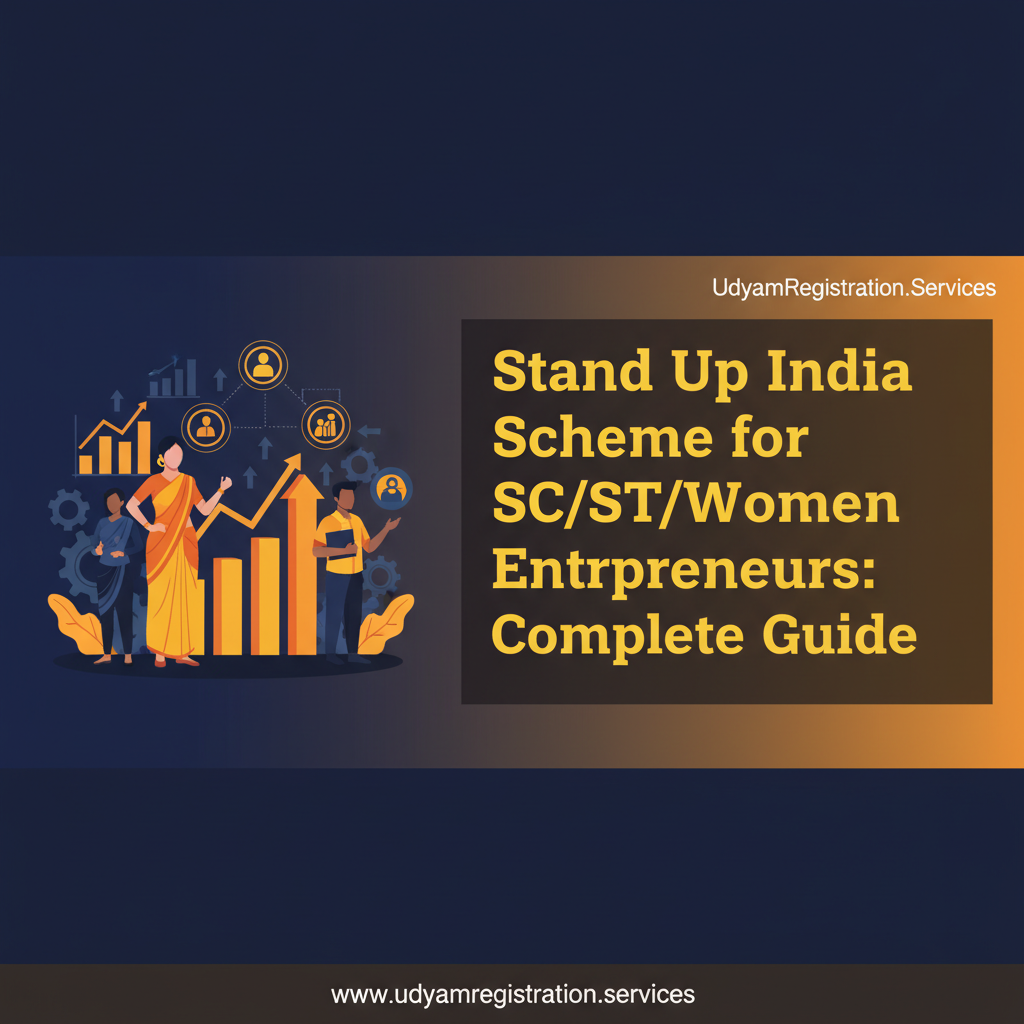
Stand Up India Scheme for SC/ST/Women Entrepreneurs: Complete Guide
Introduction to Stand Up India: Empowering Marginalized Entrepreneurs in 2026
The Stand Up India Scheme, launched in April 2016, is a flagship initiative by the Government of India designed to promote entrepreneurship among women and Scheduled Castes (SC) and Scheduled Tribes (ST) by facilitating bank loans for setting up greenfield enterprises. It aims to foster economic empowerment and job creation by providing financial assistance between Rs. 10 lakh and Rs. 1 crore.
In 2026, India continues its robust push for inclusive economic growth, with government initiatives playing a crucial role in enabling diverse segments of the population. The Stand Up India Scheme, extended till 2025, remains a cornerstone of this strategy, empowering marginalized entrepreneurs to launch and scale their businesses. Since its inception, the scheme has aimed to facilitate loans for at least one SC/ST borrower and one woman borrower per bank branch, demonstrating a clear commitment to financial inclusion and entrepreneurial diversity across the nation.
Launched on April 5, 2016, by the Government of India, the Stand Up India Scheme was conceived with the primary objective of promoting entrepreneurship at the grassroots level, specifically targeting women and individuals from Scheduled Castes (SC) and Scheduled Tribes (ST) communities. These groups often face unique challenges, including limited access to credit and support networks, which hinder their entrepreneurial aspirations. The scheme addresses these barriers by providing financial assistance and handholding support for setting up greenfield enterprises in the manufacturing, services, or trading sectors. A greenfield project signifies a venture where the beneficiary is venturing into entrepreneurship for the first time. The Department of Financial Services, Ministry of Finance, has been the driving force behind this initiative, aiming to create an ecosystem that supports budding entrepreneurs from these underserved categories.
The core mechanism of the Stand Up India Scheme involves providing a composite loan between Rs. 10 lakh and Rs. 1 crore to eligible beneficiaries. This loan is intended to cover up to 75% of the project cost, including term loan and working capital. The scheme mandates that in non-individual enterprises, at least 51% of the shareholding and controlling stake must be held by either an SC/ST or a woman entrepreneur. This ensures that the benefits directly reach the intended target groups, promoting their leadership and decision-making in the business. The scheme is operational through all Scheduled Commercial Banks, leveraging their extensive network to reach potential entrepreneurs even in remote areas. The Small Industries Development Bank of India (SIDBI) plays a pivotal role in the implementation and monitoring of the scheme, serving as the nodal agency for its operational aspects. SIDBI also manages the Stand-Up Mitra portal (standupmitra.in), which acts as an online platform for potential borrowers to register, access scheme details, and connect with various lenders and support agencies.
Beyond financial assistance, the Stand Up India Scheme also emphasizes comprehensive handholding support. This includes providing guidance on project preparation, facilitating access to skill development programs, and connecting entrepreneurs with relevant marketing and business support services. Such holistic support is crucial for first-time entrepreneurs who may lack prior business experience, thereby increasing their chances of success. The scheme's sustained focus, as evident by its extension, underscores the government's long-term vision for fostering a truly inclusive entrepreneurial landscape in India.
Key Takeaways
- The Stand Up India Scheme, launched in 2016 and extended till 2025, targets women, Scheduled Castes, and Scheduled Tribes for entrepreneurial support.
- It facilitates composite bank loans ranging from Rs. 10 lakh to Rs. 1 crore for greenfield projects in manufacturing, services, or trading.
- Eligibility requires the applicant to be above 18 years of age and not a defaulter to any bank or financial institution.
- For non-individual enterprises, SC/ST and/or women entrepreneurs must hold at least 51% shareholding and controlling stake.
- The scheme is implemented through Scheduled Commercial Banks, with SIDBI acting as the nodal agency and managing the Stand-Up Mitra portal (standupmitra.in).
- Beyond finance, the scheme offers handholding support, including project preparation and skill development, to foster successful entrepreneurship among marginalized groups.
What is Stand Up India Scheme: Definition and Core Objectives
The Stand Up India Scheme, launched on April 5, 2016, is a government initiative designed to promote entrepreneurship among women and Scheduled Castes (SC) and Scheduled Tribes (ST) across India. Its core objective is to facilitate bank loans between ₹10 lakh and ₹1 crore for setting up greenfield enterprises in manufacturing, services, or trading sectors, thereby fostering economic empowerment and inclusive growth.
Important: Udyam Registration at udyamregistration.gov.in is completely free of charge as per Gazette S.O. 2119(E), 26 June 2020. No fee is charged at any stage.
The Stand Up India Scheme, introduced by the Government of India, continues to be a pivotal initiative for promoting economic empowerment among historically underserved segments of society. As of 2025-26, the scheme aims to build upon its success in encouraging entrepreneurship, particularly among women and individuals from Scheduled Castes and Scheduled Tribes, by providing robust financial and infrastructural support for new business ventures.
At its core, the Stand Up India Scheme defines a mechanism to encourage the establishment of greenfield enterprises. A 'greenfield enterprise' refers to a new business venture in the manufacturing, services, or trading sector, where the entrepreneur is a first-time participant. The scheme mandates that each bank branch should facilitate at least one loan to an SC/ST borrower and at least one loan to a woman borrower. This structural approach ensures broad outreach and equitable distribution of opportunities across the country's banking network. The scheme covers loans from ₹10 lakh up to ₹1 crore.
The primary objectives of the Stand Up India Scheme are multifaceted, targeting both financial inclusion and sustainable economic growth:
- Promoting Entrepreneurship: A fundamental goal is to cultivate an entrepreneurial ecosystem for women and SC/ST individuals. By providing access to credit, the scheme aims to convert aspiring entrepreneurs into successful business owners, driving job creation and local economic development.
- Facilitating Bank Loans for Greenfield Projects: The scheme's central component is the provision of bank loans ranging from ₹10 lakh to ₹1 crore. These loans are specifically for greenfield projects, meaning new ventures in the manufacturing, services, or trading sectors. This focus on new businesses helps in diversifying the economic landscape and introducing innovative enterprises.
- Ensuring Inclusive Growth: By specifically targeting women and SC/ST communities, the scheme addresses historical disparities in access to finance and business opportunities. This targeted approach supports the broader national agenda of inclusive growth, ensuring that economic progress benefits all sections of society.
- Providing Handholding Support: Beyond financial assistance, the scheme also incorporates a 'handholding' component. This includes assistance with pre-loan training, project proposal preparation, marketing, and registration processes like Udyam Registration (udyamregistration.gov.in). This support is crucial for first-time entrepreneurs who may lack prior business experience. The Small Industries Development Bank of India (SIDBI) acts as the nodal agency for this support.
- Strengthening Credit Access: The scheme works through all scheduled commercial banks, including public sector and private sector banks, ensuring wide access to credit. This broad participation is vital for reaching entrepreneurs in diverse geographical locations.
The loan under the Stand Up India Scheme is a composite loan, covering 75% of the project cost including working capital. The borrower's contribution typically stands at 10-15% of the project cost, with the scheme encouraging convergence with other government schemes where feasible. This comprehensive support mechanism is designed to empower marginalized sections to contribute significantly to India's economic growth.
Key Takeaways
- The Stand Up India Scheme was launched on April 5, 2016, specifically targeting women and SC/ST entrepreneurs.
- It facilitates bank loans between ₹10 lakh and ₹1 crore for setting up greenfield enterprises.
- The scheme focuses on new businesses in manufacturing, services, or trading sectors.
- Each bank branch is mandated to provide at least one loan to an SC/ST borrower and one to a woman borrower.
- Beyond finance, it offers 'handholding' support, including pre-loan training and assistance with business setup.
- SIDBI is the nodal agency for implementing the scheme and providing necessary support to beneficiaries.
Stand Up India Eligibility Criteria: Who Can Apply for Loans
The Stand Up India scheme is exclusively for Scheduled Caste (SC), Scheduled Tribe (ST), and women entrepreneurs aged 18 years and above. Applicants must be engaged in setting up a greenfield enterprise in the manufacturing, services, or trading sector, with loans ranging from ₹10 lakh to ₹1 crore. Non-individual enterprises must have at least 51% shareholding held by an SC, ST, and/or woman entrepreneur.
Important: Udyam Registration at udyamregistration.gov.in is completely free of charge as per Gazette S.O. 2119(E), 26 June 2020. No fee is charged at any stage.
The Stand Up India scheme, launched to foster entrepreneurship among specific underserved segments, continues to be a pivotal initiative for promoting inclusive growth. In the fiscal year 2025-26, the scheme has continued its momentum, encouraging new ventures, particularly from women and SC/ST communities. Understanding the precise eligibility criteria is the first step for aspiring entrepreneurs to access financial support for their greenfield projects, ensuring that the benefits reach the intended beneficiaries.
The scheme targets individuals from Scheduled Caste (SC), Scheduled Tribe (ST), and women categories who are aspiring to start their own businesses. The primary objective is to facilitate bank loans between ₹10 lakh and ₹1 crore for setting up a greenfield enterprise. A 'greenfield' project implies a new venture in manufacturing, services, or the trading sector, distinguishing it from an expansion or modernization of an existing business. This focus ensures that the scheme primarily supports fresh entrepreneurial initiatives across India.
Key Eligibility Requirements for Stand Up India
Applicants must meet several specific conditions to qualify for the Stand Up India scheme, as detailed by the Department for Promotion of Industry and Internal Trade (DPIIT) and the Small Industries Development Bank of India (SIDBI), the scheme's operating agency. Adherence to these criteria is critical for successful loan application:
- Applicant Category: The applicant must be a woman entrepreneur, or belong to the Scheduled Caste (SC) or Scheduled Tribe (ST) category. This is the foundational criterion for accessing the scheme's benefits.
- Age Limit: The applicant must be above 18 years of age at the time of loan application. This ensures that only legally adult individuals can avail the financing.
- Enterprise Type: The loan is specifically for establishing a 'Greenfield Enterprise'. This means it must be the applicant's first venture in the manufacturing, services, or trading sector. The scheme does not support existing businesses for expansion.
- Shareholding Pattern (for Non-Individual Enterprises): In cases where the enterprise is a non-individual entity (e.g., Private Limited Company, LLP, Partnership Firm), the controlling stake is paramount. At least 51% of the shareholding and paid-up capital must be held by an SC, ST, and/or woman entrepreneur. This ensures that the target beneficiaries maintain primary control and ownership.
- Borrower's Credit History: The applicant, or any of the partners/directors in a non-individual enterprise, must not be a defaulter to any bank or financial institution. A clear credit history is a prerequisite for financial assistance under the scheme.
- Project Type: The enterprise can be involved in manufacturing, providing services, or engaging in trading activities. This broad scope allows for diverse business ideas to be funded.
These criteria are designed to channel financial assistance effectively to those who are genuinely initiating new businesses and belong to the specified demographic groups, aligning with the scheme's inclusive development goals.
| Category of Applicant | Specific Eligibility Requirements | Loan Range |
|---|---|---|
| Women Entrepreneurs |
| ₹10 lakh to ₹1 crore |
| SC Entrepreneurs |
| ₹10 lakh to ₹1 crore |
| ST Entrepreneurs |
| ₹10 lakh to ₹1 crore |
| Joint Ventures (SC/ST/Women) |
| ₹10 lakh to ₹1 crore |
Source: Startup India | SIDBI, Updated April 2026
Key Takeaways
- The Stand Up India scheme targets SC, ST, and women entrepreneurs aged 18 and above.
- Loans range from ₹10 lakh to ₹1 crore, specifically for greenfield projects in manufacturing, services, or trading.
- For non-individual entities, an SC, ST, and/or woman entrepreneur must hold at least 51% of the shareholding.
- Applicants must not have defaulted on any previous loans with banks or financial institutions.
- The scheme focuses on promoting entirely new ventures rather than expanding existing businesses.
Step-by-Step Application Process for Stand Up India Loans
The Stand Up India Scheme application process involves online registration on the Stand-Up Mitra portal, preparing a detailed project proposal, selecting a bank, and submitting the loan application. Eligible SC/ST and women entrepreneurs can initiate the process online or directly at a bank branch, followed by document submission and assessment for loans ranging from ₹10 lakh to ₹1 crore.
Important: Udyam Registration at udyamregistration.gov.in is completely free of charge as per Gazette S.O. 2119(E), 26 June 2020. No fee is charged at any stage.
The Stand Up India Scheme, launched in April 2016, continues to empower aspiring SC/ST and women entrepreneurs by facilitating access to institutional credit. With the government's continued focus on inclusive growth, the scheme aims to support over 2.5 lakh borrowers by 2025-26. Understanding the meticulous application procedure is crucial for applicants seeking to establish a greenfield enterprise in manufacturing, services, or trading sectors.
The application for Stand Up India loans is designed to be streamlined, primarily accessible through the Stand-Up Mitra portal, a digital platform developed by SIDBI. This portal acts as a bridge between the applicant and various banks, facilitating the loan application process. Applicants can also directly approach Scheduled Commercial Bank branches.
- Online Registration on Stand-Up Mitra Portal: The first step is to visit the official Stand-Up Mitra portal. Applicants need to register by providing basic details such as name, contact information, and enterprise type. This portal helps in assessing the applicant's eligibility and readiness for the loan.
- Eligibility Assessment and Support: Post-registration, the portal guides applicants through a self-assessment of their eligibility criteria, which includes being an SC/ST or woman entrepreneur, above 18 years of age, and not a defaulter to any bank or financial institution. For those requiring assistance, the portal connects them with various agencies for hand-holding support, including financial literacy, project report preparation, and skills development.
- Project Proposal Preparation: A comprehensive project proposal is essential. This document should detail the business plan, projected costs, revenue forecasts, required machinery, and market analysis. Assistance in preparing a viable project report can be sought from District Industries Centres (DICs), Lead Bank District Managers, or the portal's partner agencies. Loans are extended for greenfield projects in manufacturing, services, or trading sectors (Department of Financial Services, finmin.nic.in).
- Loan Application Submission: Once the project proposal is ready and eligibility is confirmed, applicants can select a bank through the portal or approach a bank branch directly. The application form, along with the detailed project report and necessary KYC documents (like PAN, Aadhaar, Caste Certificate where applicable, business registration documents, and address proofs), must be submitted.
- Bank Scrutiny and Sanction: The chosen bank will then scrutinize the application and project proposal. This involves an assessment of the project's viability, the applicant's creditworthiness, and adherence to the scheme's guidelines. Upon successful evaluation, the bank sanctions the loan, which typically covers 75% of the project cost, including term loan and working capital (up to ₹1 crore), as per the SIDBI guidelines.
- Disbursement and Monitoring: After sanction, the loan amount is disbursed as per the project requirements. Banks continuously monitor the project's progress to ensure that funds are utilized as per the approved plan.
Key Takeaways
- The Stand Up India Scheme targets SC/ST and women entrepreneurs for greenfield projects.
- Loans range from ₹10 lakh to ₹1 crore, covering up to 75% of the project cost.
- The primary application channel is the Stand-Up Mitra portal, a SIDBI initiative.
- A detailed project proposal and robust KYC documents are mandatory for submission.
- Support for financial literacy and project report preparation is available through partner agencies.
- The scheme requires the enterprise to be new, i.e., a greenfield project.
Required Documents for Stand Up India Loan Application
To apply for a Stand Up India loan, applicants must furnish a comprehensive set of documents including identity and address proofs, detailed business project reports, financial statements, and caste/gender certificates, all of which are crucial for verifying eligibility and assessing the proposed enterprise's viability.
The Stand Up India scheme, launched to promote entrepreneurship among Scheduled Castes (SC), Scheduled Tribes (ST), and women, continues to be a pivotal initiative for inclusive economic growth. As of recent updates for 2025-26, the government maintains its strong focus on empowering these segments, making thorough documentation a critical step for aspiring entrepreneurs seeking financial assistance through the scheme. Preparing all required documents meticulously significantly streamlines the loan application process and enhances the chances of approval.
The Stand Up India scheme aims to facilitate bank loans between ₹10 lakh and ₹1 crore for setting up greenfield enterprises by at least one SC or ST borrower and at least one woman borrower per bank branch. Successful application hinges on submitting a complete and accurate set of documents to the lending bank (Public Sector Banks, Regional Rural Banks, and Private Sector Banks). These documents help the bank assess the applicant's eligibility, the project's feasibility, and the creditworthiness.
The documents typically fall into several categories:
- Identity and Address Proof: Essential for establishing the applicant's legal identity and residential address.
- Business Proof: To validate the legal existence and nature of the proposed or existing business.
- Financial Documents: For assessing the financial health and projections of the business.
- Category-Specific Proof: To confirm the applicant's eligibility under the SC/ST or Women entrepreneur categories.
- Project-Related Documents: To detail the proposed business plan and its viability.
Updated 2025-2026: The Stand Up India scheme guidelines continue to emphasize digital submission where possible, aligning with the Digital India initiative, and the documentation requirements remain largely consistent with the scheme's original design and subsequent operational refinements by SIDBI and the DPIIT.
Comprehensive Document Checklist for Stand Up India Loan
| Document Type | Specific Document | Purpose/Notes | Source |
|---|---|---|---|
| Applicant Identity Proof | Aadhaar Card, PAN Card, Voter ID Card, Passport, Driving License | To verify the identity of the individual applicant(s). Mandatory for KYC compliance. | Stand Up India Guidelines |
| Applicant Address Proof | Aadhaar Card, Utility Bills (electricity, water, gas - not older than 2 months), Passport, Rental Agreement (if applicable) | To confirm residential address. | Stand Up India Guidelines |
| Category Proof | SC/ST Certificate (issued by competent authority), Proof of Woman Entrepreneurship (self-declaration or specific business registration document indicating female ownership) | Mandatory for eligibility under the scheme's target groups. | Stand Up India Guidelines |
| Business Entity Proof | Partnership Deed (for Partnership Firm), Certificate of Incorporation (for Company/LLP), Memorandum of Association (MoA) & Articles of Association (AoA), GST Registration Certificate (if applicable), Udyam Registration Certificate | To establish the legal structure and registration of the business. Udyam Registration is crucial for MSME benefits. | Stand Up India Guidelines |
| Business Address Proof | Utility Bills (for business premises), Rent Agreement (if rented), Property Documents (if owned) | To verify the operational address of the business. | Stand Up India Guidelines |
| Project Report | Detailed Project Report (DPR) including business plan, technical feasibility, financial projections (profit/loss, balance sheet for 5-7 years), marketing strategy, raw material sources, machinery details. | Crucial for assessing the viability and potential of the proposed enterprise. | Stand Up India Guidelines |
| Financial Documents | Bank Account Statements (personal & business, last 6-12 months), Income Tax Returns (ITR) (last 2-3 years for existing businesses/applicants), Provisional/Audited Financials (for existing businesses), Quotations for machinery/equipment. | To evaluate the applicant's financial standing and the project's financial requirements. | Stand Up India Guidelines |
| Collateral/Guarantee Related | Details of primary and collateral security (if any, though the scheme aims for collateral-free through CGTMSE). Third-party guarantee details if provided. | To secure the loan as per bank requirements, although the scheme is backed by CGTMSE. | Stand Up India Guidelines |
| Photographs | Passport-sized photographs of applicant(s). | For identification purposes. | Stand Up India Guidelines |
| Other Documents | Any specific licenses/registrations required for the business (e.g., FSSAI for food businesses), Experience certificates (if relevant to the project). | As per the nature of the business. | Stand Up India Guidelines |
| Source: Stand Up India Scheme Guidelines, Ministry of Finance (startupindia.gov.in, sidbi.in) | |||
Ensuring all documents are up-to-date and correctly furnished is paramount. Banks may also request additional documents based on the specific nature of the project or their internal policies. It is advisable for applicants to thoroughly review the scheme guidelines available on official portals like Startup India and SIDBI, and consult with their chosen bank for a precise list tailored to their application.
Key Takeaways
- The Stand Up India scheme provides financial support from ₹10 lakh to ₹1 crore for greenfield enterprises led by SC/ST or women entrepreneurs.
- Comprehensive documentation, including identity, address, business, financial, and category-specific proofs, is mandatory for loan application.
- A detailed Project Report (DPR) outlining business viability and financial projections is crucial for bank assessment.
- An Udyam Registration certificate is essential for formalizing the business and availing MSME-related benefits.
- Applicants must provide valid SC/ST certificates or proof of woman entrepreneurship to meet the scheme's core eligibility criteria.
- While the scheme is backed by CGTMSE, banks may still require details of primary or collateral security if applicable.
Stand Up India Loan Features: Amount, Interest Rate and Benefits
The Stand Up India Scheme provides composite loans ranging from ₹10 lakh to ₹1 crore to SC/ST and women entrepreneurs for greenfield projects. The interest rate is typically the bank's base rate (MCLR) + 3% + a tenor premium. Loans are collateralized by primary security, often supported by the Credit Guarantee Fund Scheme for Stand-Up India (CGFSI) or state guarantee schemes, and are repayable over 7 years with an 18-month moratorium.
Updated 2025-2026: The core features and eligibility criteria for the Stand Up India scheme remain consistent, continuing to focus on empowering SC/ST and women entrepreneurs as per the scheme guidelines overseen by the Department of Financial Services (DFS).
Launched to foster entrepreneurship among underserved sections of society, the Stand Up India scheme has facilitated significant financial support. By March 2026, the scheme has continued its momentum, extending credit to numerous first-time entrepreneurs. The initiative aims to reduce the financial hurdles faced by women and Scheduled Caste/Tribe individuals in establishing their own ventures, thereby promoting inclusive economic growth.
The scheme is designed to provide comprehensive financial assistance, covering both term loans and working capital requirements for greenfield projects in manufacturing, services, or trading sectors. A 'greenfield' enterprise implies the borrower's first-time venture in the manufacturing or services or trading sector. For non-individual enterprises, at least 51% of the shareholding and controlling stake must be held by an SC/ST or woman entrepreneur. The loan structure is built to be supportive, considering the often nascent stage of these businesses.
Key Loan Features and Benefits:
The Stand Up India scheme offers a composite loan for project costs, which includes both term loan and working capital. The specific terms are structured to be accessible:
- Loan Amount: A composite loan between ₹10 lakh and ₹1 crore is provided. This loan is intended to cover up to 75% of the project cost, inclusive of term loan and working capital. The promoter's contribution is typically expected to be 10-25% of the project cost, though a minimum of 10% is encouraged under the scheme to ensure commitment.
- Interest Rate: The applicable interest rate is set by the bank but cannot exceed (Base Rate / MCLR of the bank) + 3% + tenor premium. This structure ensures that the interest burden remains competitive and affordable for new entrepreneurs.
- Security: Besides the primary security of the asset created from the loan, the loan may be secured by collateral security or guarantee of Credit Guarantee Fund Scheme for Stand-Up India (CGFSI) or any other guarantee scheme (such as CGTMSE, where applicable). This aspect significantly reduces the requirement for traditional collateral, which is often a major barrier for new entrepreneurs.
- Repayment Period: The loan is repayable within 7 years, with a maximum moratorium period of up to 18 months. This extended repayment timeline and initial grace period provide critical breathing room for new businesses to stabilize and generate revenue.
- Working Capital: For working capital requirements up to ₹10 lakh, the facility is sanctioned by way of an Overdraft (OD) limit, with a RuPay Debit Card issued for convenience. For working capital above ₹10 lakh, it is sanctioned by way of a Cash Credit limit.
- Handholding Support: Beyond financial assistance, the scheme also emphasizes handholding support to beneficiaries. This includes pre-loan training, assistance with project reports, and registration with online platforms like GeM, which are crucial for navigating the initial challenges of entrepreneurship.
The comprehensive nature of these features makes the Stand Up India scheme a vital tool for promoting economic empowerment and enterprise development among target groups across India.
| Feature | Details (2025-26) | Eligibility | Nodal Agency | How to Apply |
|---|---|---|---|---|
| Loan Amount | ₹10 Lakh to ₹1 Crore (up to 75% of project cost) | SC/ST and/or Woman Entrepreneur (18+ years, greenfield project, 51% stake in non-individual entity) | SIDBI, Department of Financial Services (DFS) | Apply through bank branch, Stand-Up India portal, or Lead District Manager |
| Interest Rate | Base Rate/MCLR + 3% + Tenor Premium | (Same as above) | (Same as above) | (Same as above) |
| Security | Primary security + collateral or CGFSI/state guarantee | (Same as above) | (Same as above) | (Same as above) |
| Repayment Period | Up to 7 years + 18-month moratorium | (Same as above) | (Same as above) | (Same as above) |
| Working Capital | Up to ₹10 Lakh as OD, above ₹10 Lakh as Cash Credit (with RuPay Debit Card for OD) | (Same as above) | (Same as above) | (Same as above) |
| Target Beneficiaries | SC/ST and Women entrepreneurs for greenfield projects | (Same as above) | (Same as above) | (Same as above) |
Key Takeaways
- The Stand Up India scheme provides a composite loan of ₹10 lakh to ₹1 crore, covering up to 75% of a greenfield project's cost.
- Interest rates are capped at the bank's base rate (MCLR) + 3% + a tenor premium, making financing accessible.
- Loans are secured by primary assets and can be supplemented by the Credit Guarantee Fund Scheme for Stand-Up India (CGFSI) to reduce collateral requirements.
- A flexible repayment period of up to 7 years is offered, including a crucial initial moratorium of up to 18 months.
- Working capital needs up to ₹10 lakh are met via an Overdraft facility, integrated with a RuPay Debit Card.
- The scheme is exclusively for Scheduled Caste, Scheduled Tribe, and women entrepreneurs establishing their first-time ventures.
2025-2026 Stand Up India Scheme Updates and Policy Changes
The Stand Up India Scheme continues its operations into the 2025-2026 financial year, maintaining its core objective of fostering entrepreneurship among Scheduled Caste (SC), Scheduled Tribe (ST), and women beneficiaries. Key updates for this period emphasize sustained financial inclusion, streamlined application processes through the Stand Up India portal, and ongoing support for greenfield enterprise funding ranging from Rs. 10 lakh to Rs. 1 crore. The scheme's extension underscores the government's commitment to empowering these underserved groups to establish their own businesses.
Updated 2025-2026: The Stand Up India Scheme, originally launched in 2016, has been extended until the financial year 2025, ensuring its continued impact on promoting entrepreneurship among SC, ST, and women beneficiaries, as per announcements by the Ministry of Finance.
Launched with the vision of empowering aspiring entrepreneurs from Scheduled Castes (SC), Scheduled Tribes (ST), and women, the Stand Up India Scheme has consistently aimed to facilitate access to institutional credit. As India progresses into the 2025-2026 financial year, the scheme maintains its critical role in boosting grassroots entrepreneurship, leveraging digital platforms for wider reach. The Ministry of Finance reported a significant disbursement of over Rs. 30,000 crore to more than 1.6 lakh beneficiaries since its inception, highlighting its substantial impact on financial inclusion and economic empowerment.
The core policy of the Stand Up India Scheme, governed by the Department of Financial Services, Ministry of Finance, continues to focus on providing composite loans between Rs. 10 lakh and Rs. 1 crore for setting up a new (greenfield) enterprise. This enterprise can be in manufacturing, services, or the trading sector. For 2025-2026, the primary emphasis remains on ensuring that eligible entrepreneurs can smoothly access funding and support, building upon previous years' successes and lessons learned.
Key Operational Guidelines and Enhancements for 2025-2026
Several operational guidelines and procedural refinements are pertinent for the 2025-2026 period:
- Scheme Extension Confirmation: The Stand Up India Scheme has received a confirmed extension up to the financial year 2025. This ensures the availability of funding and support for the target groups for the current period and into early 2026, maintaining continuity of the government's policy initiatives. Further extensions are typically reviewed closer to the expiry date. (pib.gov.in)
- Digital Application Streamlining: The online application portal for the Stand Up India Scheme, accessible via startupindia.gov.in, remains the primary channel for applications. Continuous efforts are made to enhance user experience, simplify documentation requirements, and accelerate the processing of loan applications. Applicants are encouraged to utilize this portal for faster and more transparent processing.
- Emphasis on Financial Literacy: Recognizing the importance of informed entrepreneurship, lead banks and Small Industries Development Bank of India (SIDBI) continue to organize awareness camps and provide financial literacy support. This ensures that prospective beneficiaries fully understand the loan terms, repayment schedules, and available mentorship opportunities. (sidbi.in)
- Unified Financial Access: The scheme encourages banks to integrate the Stand Up India loan applications with other financial products, ensuring a more comprehensive package for entrepreneurs. This includes facilitating access to working capital, machinery loans, and related business support services from various banking and financial institutions.
- Monitoring and Evaluation: The performance of the Stand Up India Scheme is continuously monitored by the Ministry of Finance and SIDBI. Regular reviews ensure that the scheme achieves its stated objectives of promoting entrepreneurship and job creation, with potential minor adjustments in policy or implementation being made based on performance data and feedback.
No significant changes to the core eligibility criteria or loan amount ranges (Rs. 10 lakh to Rs. 1 crore) have been announced for the 2025-2026 period. The emphasis is on sustained implementation and reaching a wider base of beneficiaries. The scheme also includes a credit guarantee cover through the Credit Guarantee Fund Scheme for Stand-Up India (CGFSI), ensuring reduced risk for lending institutions, which remains fully operational.
Key Takeaways
- The Stand Up India Scheme is confirmed to continue its operations throughout the 2025-2026 financial year, maintaining its focus on SC, ST, and women entrepreneurs.
- It provides composite loans between Rs. 10 lakh and Rs. 1 crore for new (greenfield) enterprises in manufacturing, services, or trading sectors.
- The application process is primarily digital, accessible through the Stand Up India portal on startupindia.gov.in, with continuous efforts to streamline it.
- Financial literacy and awareness programs are actively conducted by SIDBI and lead banks to support potential beneficiaries.
- The scheme continues to be backed by the Credit Guarantee Fund Scheme for Stand-Up India (CGFSI) to mitigate credit risk for banks.
State-wise Stand Up India Implementation and Regional Variations
The Stand Up India Scheme's implementation varies significantly across Indian states, influenced by state-level awareness campaigns, financial infrastructure, and complementary entrepreneurial support systems. While the core guidelines are uniform, states enhance outreach through their respective financial institutions and nodal agencies, leading to regional differences in beneficiary numbers and sectoral focus.
Updated 2025-2026: The Stand Up India Scheme, continuing its focus on SC/ST and Women entrepreneurs, sees varied implementation strategies at the state level, with ongoing efforts to bridge regional gaps in access to finance and support.
The Stand Up India Scheme, launched by the Department of Financial Services (DFS), Government of India, aims to foster entrepreneurship among women and Scheduled Castes/Tribes. While the scheme's overarching framework and eligibility criteria are centrally defined, its ground-level implementation and impact exhibit considerable regional variations. As of 2025-26, various states have adopted distinct approaches to disseminate information, facilitate applications, and provide additional support, reflecting their unique economic landscapes and administrative capacities. This state-wise divergence is a critical factor influencing the scheme's overall reach and success.
State-level variations in Stand Up India implementation often stem from several factors, including the proactive engagement of State Level Bankers' Committees (SLBCs) and District Level Implementation Committees. These committees play a pivotal role in reviewing applications, ensuring adequate credit flow, and addressing operational challenges. States with robust financial literacy programs and extensive networks of financial institutions tend to show higher participation rates. Furthermore, regional socio-economic conditions, such as the prevalence of specific industries or the general entrepreneurial spirit, can influence the type of greenfield projects being funded under the scheme.
Key State Initiatives and Nodal Agencies
Several states have established dedicated portals or agencies that complement the Stand Up India Scheme by providing handholding support, training, and additional incentives for aspiring entrepreneurs. For instance, some states offer subsidies or mentorship programs that align with the scheme's objectives, thereby enhancing its attractiveness to eligible beneficiaries. The involvement of state-specific MSME departments and industrial development corporations is crucial in creating an ecosystem conducive to startup growth, particularly for women and SC/ST entrepreneurs who may require more nuanced support.
These state-specific initiatives often focus on increasing awareness about central schemes like Stand Up India, simplifying the application process, and linking beneficiaries with local skill development programs. This localized approach helps in tailoring support to meet regional demands and overcome specific challenges faced by entrepreneurs in different parts of the country. The effectiveness of these state-level interventions directly contributes to the varied success rates and disbursement figures observed across India.
| State | Key State-Level Agency / Portal | Approach to Stand Up India Facilitation | Notable State-Specific Entrepreneurship Support |
|---|---|---|---|
| Maharashtra | MAITRI portal, MIDC | Strong SLBC involvement for credit linkage; focus on industrial & service sector startups. | CM Employment Generation Programme (CMEGP), MAITRI (Maharashtra Industry, Trade and Investment Facilitation Cell). |
| Karnataka | Udyog Mitra portal, KIADB | Digitized application support; strong emphasis on tech and manufacturing startups. | Karnataka Startup Policy, Rajiv Gandhi Udyami Mitra Scheme. |
| Gujarat | iNDEXTb, GIDC | Vibrant Gujarat MSME integration; focus on manufacturing and export-oriented units. | Gujarat Industrial Policy, iNDEXTb (Industrial Extension Bureau) for investor facilitation. |
| Uttar Pradesh | UPSIDA, ODOP Scheme | Rural outreach through District Industries Centres (DICs); promotion of traditional crafts & services. | UP MSME Policy 2022, One District One Product (ODOP) scheme. |
| Tamil Nadu | TIDCO, SIPCOT | Proactive financial institution partnerships; focus on women entrepreneurs in engineering and textiles. | CM New MSME Scheme, Tamil Nadu Industrial Development Corporation (TIDCO). |
| Rajasthan | RIICO, RIPS-2022 | Facilitation through single-window clearance systems; focus on tourism and traditional industries. | CM SME Loan scheme, Rajasthan Investment Promotion Scheme (RIPS-2022). |
| West Bengal | WBSIDCO, Shilpa Sathi | Emphasis on service sector and small-scale manufacturing; accessible through Shilpa Sathi portal. | West Bengal Incentive Scheme for MSMEs, WBSIDCO (West Bengal Small Industries Development Corporation). |
| Source: Compiled from state industrial development portals and scheme documents (e.g., startupindia.gov.in, msme.gov.in) | |||
Key Takeaways
- Stand Up India Scheme implementation and success rates exhibit significant regional variations across Indian states.
- State Level Bankers' Committees (SLBCs) and District Level Implementation Committees are crucial for effective scheme rollout.
- Proactive state government initiatives, including awareness campaigns and additional support programs, enhance scheme reach.
- States often integrate the Stand Up India Scheme with their own entrepreneurship development policies and portals.
- Regional economic conditions and financial infrastructure play a key role in determining the type and number of projects funded.
- Nodal agencies like MAITRI (Maharashtra), Udyog Mitra (Karnataka), and iNDEXTb (Gujarat) provide localized facilitation and support.
Common Stand Up India Application Mistakes and How to Avoid Them
Common Stand Up India application mistakes often involve incomplete documentation, a weak project report lacking detailed financial projections, and insufficient clarity on the applicant's eligibility or the proposed business plan. To avoid these, applicants should meticulously prepare all required documents, craft a comprehensive project report outlining viability, ensure their eligibility criteria are met, and understand the scheme's terms for greenfield ventures by SC/ST/Women entrepreneurs.
The Stand Up India Scheme, launched to promote entrepreneurship among SC/ST and women, aims to facilitate bank loans from Rs 10 lakh to Rs 1 crore for setting up greenfield enterprises. While the scheme offers significant support, many aspiring entrepreneurs face delays or rejections due to common application errors. Understanding and avoiding these pitfalls is crucial for a smooth and successful application process in 2025-26.
Applying for the Stand Up India scheme requires diligent preparation and a clear understanding of the eligibility criteria and financial requirements. Overlooking critical aspects during the application process can significantly hinder approval. Below are some of the most common mistakes applicants make and strategic ways to mitigate these risks.
1. Incomplete or Incorrect Documentation
One of the most frequent reasons for application delays or rejections is the submission of incomplete or inaccurate documents. Banks require a comprehensive set of papers to assess the applicant's background, creditworthiness, and the project's viability.
- Mistake: Failing to provide all necessary KYC documents (Aadhaar, PAN), caste certificates (for SC/ST), proof of woman entrepreneurship, detailed project reports, land/property ownership documents, and relevant experience certificates. Discrepancies in names or addresses across documents can also cause issues.
- Avoidance: Create a meticulous checklist of all required documents as per the official Stand Up India portal (startupindia.gov.in) and your chosen bank's specific requirements. Ensure all documents are current, self-attested where necessary, and present clear, legible copies. Cross-verify details like names, addresses, and dates across all submitted documents for consistency.
2. Poorly Developed Project Report
The project report is the cornerstone of any loan application, particularly for a scheme like Stand Up India, which supports new ventures. A report lacking depth, realism, or comprehensive analysis can quickly lead to skepticism from the lending institution.
- Mistake: Submitting a generic project report without detailed market analysis, realistic financial projections, a clear operational plan, or an assessment of potential risks and mitigation strategies. This often includes vague details about product/service or unrealistic revenue forecasts.
- Avoidance: Develop a thorough and convincing project report including an executive summary, a detailed business plan, comprehensive market research, specific details of products/services, proposed machinery/equipment, human resource plan, marketing strategy, and detailed financial projections (profit & loss statements, balance sheets, cash flow projections for at least 3-5 years). The report should clearly demonstrate the project's viability and your understanding of the business ecosystem. Resources and templates are often available through SIDBI or lead banks (sidbi.in).
3. Mismatch with Eligibility Criteria
The Stand Up India scheme has specific eligibility criteria designed to support targeted groups. Any deviation from these, even minor ones, can result in immediate rejection.
- Mistake: Applying without ensuring that the applicant is an SC/ST individual or a woman entrepreneur, or that the proposed project is a greenfield enterprise (first-time venture) in the manufacturing, services, or trading sector. Common errors also include not meeting the age criteria (above 18 years) or having a default history with any bank/financial institution.
- Avoidance: Carefully review the official eligibility criteria on the scheme's website (startupindia.gov.in) before initiating the application. For non-individual enterprises, ensure the entity is at least 51% owned and controlled by an SC/ST and/or Woman entrepreneur. It is critical to confirm that neither the applicant nor the enterprise has any existing loan defaults with any bank or financial institution.
4. Insufficient Understanding of Financial Requirements and Own Contribution
Applicants often underestimate the need for personal capital or fail to articulate how they will meet the mandatory 'own contribution' aspect, which is a key indicator of commitment.
- Mistake: Not demonstrating the ability to contribute at least 10% of the project cost from personal sources, or miscalculating the total project cost, leading to a significant shortfall in the proposed loan amount.
- Avoidance: Clearly outline the total project cost, including both fixed assets and working capital requirements. Prepare a concrete plan for your 10% own contribution, ensuring the funds are readily available. Banks need assurance that the entrepreneur is financially invested in the project, demonstrating a shared risk. The loan typically covers 75% of the project cost, inclusive of working capital, and your contribution bridges any remaining gaps.
5. Ignoring Credit History and CIBIL Score
While the Stand Up India scheme supports new entrepreneurs, a poor personal or existing business credit history can negatively impact the application.
- Mistake: Not checking one's CIBIL score or being unaware of past financial defaults or irregularities that could flag the application as high-risk.
- Avoidance: Obtain your personal credit report well in advance of applying. Rectify any discrepancies or clear any outstanding dues to improve your credit score. A healthy credit history reflects financial discipline, which is favorable for any loan application.
6. Lack of Follow-up and Seeking Guidance
A passive approach after submission or reluctance to seek clarification can lead to prolonged processing times or even forgotten applications.
- Mistake: Submitting the application and then waiting indefinitely without proactively following up with the bank or addressing queries promptly. Also, not utilizing available resources for guidance.
- Avoidance: Maintain regular and polite communication with the bank official handling your application. Be prepared to answer questions, provide additional information, or clarify details swiftly. This demonstrates professionalism and commitment. Leverage platforms like the Stand Up Mitra portal (standupmitra.in) for tracking application status and accessing guidance. SIDBI also provides support to potential applicants (sidbi.in).
By proactively addressing these common mistakes, aspiring SC/ST and women entrepreneurs can significantly improve their chances of securing financial assistance under the Stand Up India scheme, turning their innovative business ideas into reality.
Key Takeaways
- Meticulous Documentation: Ensure all required KYC, caste/gender proof, and business-related documents are complete, correct, and self-attested before submission.
- Robust Project Report: Develop a detailed business plan with realistic financial projections, market analysis, and operational strategies to demonstrate project viability.
- Verify Eligibility: Double-check all criteria including age, enterprise type (greenfield), ownership percentage, and credit history to avoid immediate rejection.
- Plan Own Contribution: Clearly demonstrate the source and ability to fund at least 10% of the project cost as the entrepreneur's own contribution.
- Proactive Follow-up: Stay in regular communication with the lending bank and promptly respond to any queries or requests for additional information.
- Utilize Official Resources: Refer to startupindia.gov.in, standupmitra.in, and sidbi.in for official guidelines, FAQs, and application support.
Stand Up India Success Stories: Real Entrepreneur Case Studies
The Stand Up India scheme has empowered thousands of SC/ST and women entrepreneurs across India, facilitating credit access and fostering business growth. Through financial assistance ranging from Rs 10 lakh to Rs 1 crore, beneficiaries have established new ventures in diverse sectors like manufacturing, services, and trading, significantly contributing to job creation and economic development.
Important: Udyam Registration at udyamregistration.gov.in is completely free of charge as per Gazette S.O. 2119(E), 26 June 2020. No fee is charged at any stage.
Launched with the vision of promoting entrepreneurship among women and Scheduled Castes/Tribes, the Stand Up India scheme continues to be a pivotal force in India's inclusive growth narrative. By 2026, the scheme has supported numerous first-time entrepreneurs, turning innovative ideas into viable businesses. This initiative aligns with the government's broader agenda of fostering self-reliance and economic empowerment across underserved segments of society.
The Stand Up India scheme, operational since 2016, aims to facilitate bank loans between Rs 10 lakh and Rs 1 crore to at least one SC/ST borrower and one woman borrower per bank branch for setting up a greenfield enterprise. These loans are for manufacturing, services, or the trading sector, reflecting the scheme's broad scope (Source: startupindia.gov.in). The scheme provides not just financial support but also handholding assistance, helping entrepreneurs navigate various challenges from project conceptualisation to market linkage.
One compelling success story is that of Ms. Priya Sharma from Karnataka, an SC entrepreneur who leveraged the Stand Up India scheme to establish a sustainable packaging unit. With a loan of Rs 60 lakh, she purchased essential machinery and set up her manufacturing facility in a rural industrial cluster. Her enterprise, "EcoPack Solutions," focuses on producing biodegradable packaging materials, aligning with current environmental trends. Within three years, she expanded her client base to include major e-commerce players and local businesses, creating employment for over 30 individuals, predominantly women from nearby villages. Her commitment to eco-friendly practices and local employment generation exemplifies the scheme's dual impact on economic and social development (Source: sidbi.in for SIDBI being the implementing agency).
Another notable case involves Mr. Rajesh Kumar, an ST entrepreneur from Jharkhand, who ventured into the digital marketing and web development sector. Recognizing the growing demand for online presence among small businesses, Mr. Kumar secured a loan of Rs 35 lakh under the scheme to launch "Digital Connect Hub." His company initially offered affordable website design and social media management services to local MSMEs. Through consistent performance and innovative solutions, he expanded his team and services, now catering to clients across multiple states. His journey underscores the scheme's effectiveness in empowering individuals from remote areas to participate in the digital economy and create high-skill jobs.
Furthermore, the scheme has seen success in traditional sectors with modern twists. Take for instance, Ms. Anjali Singh from Uttar Pradesh, a woman entrepreneur who transformed a traditional garment manufacturing unit into a contemporary fashion brand. Utilizing a Stand Up India loan of Rs 80 lakh, she modernized her production facility, introduced new design lines, and integrated online sales channels. Her brand, "Ethnic Threads," gained popularity for its fusion wear and ethical sourcing, showcasing how financial assistance coupled with entrepreneurial vision can revitalize existing industries. Her success story highlights the scheme's flexibility in supporting both entirely new 'greenfield' ventures and significant modernization efforts (Source: pib.gov.in).
These examples, representing diverse backgrounds and business models, illustrate the transformative power of the Stand Up India scheme. By reducing barriers to credit for specific demographic groups, it has not only fostered individual prosperity but also contributed to a more inclusive and dynamic entrepreneurial landscape across India. The handholding support, which includes guidance from SIDBI and NABARD, and connections to various government and private sector networks, plays a crucial role in enabling these entrepreneurs to succeed (Source: startupindia.gov.in).
Impact Across Sectors and Regions
The case studies demonstrate a recurring theme: the ability of Stand Up India beneficiaries to identify market gaps and innovate, supported by timely financial backing. From leveraging technology in services to adopting sustainable practices in manufacturing, entrepreneurs are building robust businesses. The scheme's decentralized approach, facilitated through public sector bank branches across the country, ensures that aspiring entrepreneurs from various states, including those with less developed industrial infrastructures, can access support. This widespread impact is vital for balanced regional development and inclusive growth, reinforcing the scheme's foundational objectives.
Key Takeaways
- The Stand Up India scheme targets SC/ST and women entrepreneurs for greenfield enterprise loans between Rs 10 lakh and Rs 1 crore.
- It facilitates business creation in manufacturing, services, and trading sectors, contributing to economic diversification.
- Beneficiaries leverage the scheme's financial and handholding support to innovate and expand, creating local employment opportunities.
- Success stories from various states like Karnataka, Jharkhand, and Uttar Pradesh highlight the scheme's pan-India reach and effectiveness.
- The scheme significantly contributes to inclusive growth by empowering underserved entrepreneurial segments.
- Guidance from agencies like SIDBI and NABARD, along with access to networks, strengthens the entrepreneurs' journey.
Stand Up India Scheme Frequently Answered Questions
The Stand Up India Scheme aims to foster entrepreneurship among Scheduled Castes (SC), Scheduled Tribes (ST), and women by facilitating bank loans between ₹10 Lakh and ₹1 Crore for greenfield projects. This section addresses common queries regarding eligibility, loan processing, interest rates, and repayment terms, ensuring clarity for potential applicants.
Important: Udyam Registration at udyamregistration.gov.in is completely free of charge as per Gazette S.O. 2119(E), 26 June 2020. No fee is charged at any stage.
Navigating government schemes can often raise numerous questions regarding their application, benefits, and operational aspects. As of April 2026, the Stand Up India Scheme continues to be a vital initiative, extending its support to budding entrepreneurs from SC, ST, and women categories. Addressing common queries helps demystify the process and encourages wider participation, ensuring more eligible individuals can leverage this financial assistance to establish their first-time ventures.
Common Questions About Stand Up India Scheme
Q1: What is the primary objective of the Stand Up India Scheme?
A: The Stand Up India Scheme aims to promote entrepreneurship among women and Scheduled Castes (SC) and Scheduled Tribes (ST) communities. It facilitates bank loans for setting up greenfield enterprises in manufacturing, services, or trading sectors, thereby fostering economic empowerment and job creation. The scheme was launched in 2016 and has been extended to 2025 (Source: standupmitra.in).
Q2: Who is eligible to apply for a loan under the Stand Up India Scheme?
A: Eligibility is restricted to SC/ST individuals and women entrepreneurs aged above 18 years. The scheme specifically targets 'greenfield projects', meaning the first-time venture of the beneficiary. In the case of non-individual enterprises (e.g., companies, LLPs), at least 51% of the shareholding and controlling stake must be held by an SC/ST or woman entrepreneur. The applicant should not be a defaulter to any bank or financial institution.
Q3: What is the loan amount offered and what does it cover?
A: The scheme provides composite loans ranging from ₹10 Lakh to ₹1 Crore. This composite loan is designed to cover up to 75% of the project cost, including both the term loan component for fixed assets and the working capital requirement. The 75% limit does not apply if the borrower's contribution, along with support from any other scheme, exceeds 25% of the project cost (Source: sidbi.in).
Q4: What are the typical interest rates for Stand Up India loans?
A: The interest rate applicable will be the lowest rate of the bank for that category, which generally means (Base Rate + 3% + Tenor Premium). Banks are free to decide their own interest rates within the overall RBI guidelines. The rate is typically linked to the bank's MCLR (Marginal Cost of Funds Based Lending Rate).
Q5: Is collateral security required for Stand Up India loans?
A: Yes, the loan is secured by a primary security, which typically refers to the assets created by the loan itself. Additionally, the loan may be covered by collateral security or guarantee cover through the Credit Guarantee Fund Scheme for Micro & Small Enterprises (CGTMSE). For MSME loans, CGTMSE can guarantee up to ₹5 crore, helping reduce collateral requirements (Source: cgtmse.in).
Q6: What is the repayment period and is there a moratorium period?
A: The loan is repayable within a maximum period of 7 years. A moratorium period of up to 18 months is provided, during which the borrower is not required to make principal repayments, allowing the business to stabilize before the repayment cycle begins. This flexibility is crucial for new ventures.
Q7: How can one apply for the Stand Up India Scheme?
A: Prospective entrepreneurs can apply through various channels. They can directly approach any bank branch, apply online through the Stand Up India portal (standupmitra.in), or seek assistance from Lead District Managers (LDMs) or State Level Bankers’ Committee (SLBC) officials. The portal acts as a facilitation platform to connect potential borrowers with banks.
Key Takeaways
- The Stand Up India Scheme primarily targets SC/ST individuals and women entrepreneurs for greenfield projects.
- Loans range from ₹10 Lakh to ₹1 Crore, covering up to 75% of the project cost including both term loan and working capital.
- Interest rates are determined by the lending banks, typically linked to their MCLR with a base rate plus a premium.
- Loans require primary security and may be supported by collateral or CGTMSE guarantee cover.
- A flexible repayment tenure of up to 7 years is offered, along with a maximum moratorium of 18 months.
- Applications can be made directly at bank branches or facilitated through the Stand Up India online portal.
Conclusion and Official Stand Up India Resources
Important: Udyam Registration at udyamregistration.gov.in is completely free of charge as per Gazette S.O. 2119(E), 26 June 2020. No fee is charged at any stage.
The Stand Up India Scheme, launched by the Government of India, continues to be a pivotal initiative in fostering entrepreneurship among Scheduled Castes (SC), Scheduled Tribes (ST), and women. As of April 2026, the scheme has facilitated significant financial support, encouraging thousands of new greenfield businesses and contributing profoundly to inclusive economic growth. This program primarily focuses on providing collateral-free term loans for manufacturing, services, or trading sectors, underscoring India's commitment to empowering underrepresented communities in the business landscape.
Since its inception, the Stand Up India Scheme has aimed to bridge the entrepreneurial gap by addressing financial access challenges faced by SC, ST, and women entrepreneurs. The scheme mandates at least one SC or ST borrower and one woman borrower per bank branch, ensuring widespread reach and impact. Loans ranging from Rs 10 lakh to Rs 1 crore are provided for establishing greenfield projects – a first-time venture of the beneficiary in the non-farm sector. This financial backing is crucial, especially for segments that historically encountered barriers to credit and market access, as highlighted by various government reports on financial inclusion.
The scheme’s success lies in its comprehensive approach, which not only offers financial assistance but also integrates handholding support. This includes facilitating training, market linkages, and registration with Udyam, thereby creating a robust ecosystem for new enterprises to thrive. The emphasis on greenfield projects ensures that new job creators are emerging from diverse backgrounds, stimulating local economies and promoting self-reliance. For instance, the scheme has seen substantial uptake in service sectors like IT-enabled services and small-scale manufacturing units, reflecting the diverse aspirations of its beneficiaries across India.
Moreover, the Stand Up India Scheme aligns with broader national objectives of financial inclusion and 'Atmanirbhar Bharat'. By promoting entrepreneurship among SC, ST, and women, it directly contributes to wealth creation at the grassroots level and enhances socio-economic mobility. The simplified application process through the Stand-Up Mitra portal, along with the involvement of various financial institutions and Small Industries Development Bank of India (SIDBI) as the nodal agency, streamlines the journey from idea to enterprise. Banks play a critical role in evaluating proposals, disbursing loans, and providing necessary mentorship, making them key partners in this national endeavour. As of 2025-26, the scheme continues to evolve, with ongoing efforts by the Ministry of Finance to further simplify processes and expand outreach to ensure more eligible entrepreneurs can avail its benefits.
Official Stand Up India Resources
For individuals interested in leveraging the Stand Up India Scheme, several official resources provide comprehensive guidance and support. The primary platform for application and information is the Stand-Up Mitra portal, which serves as a central hub for prospective entrepreneurs to register, prepare their project proposals, and connect with various banks and support agencies. Additionally, information can be obtained from the official website of the Ministry of MSME (msme.gov.in) and participating commercial banks nationwide. These banks, which include public sector and private sector banks, are instrumental in the scheme's implementation by providing the actual credit facilities and related services. Entrepreneurs are encouraged to visit their nearest bank branches or utilize the online portal for detailed eligibility criteria and application procedures.
Key Takeaways
- The Stand Up India Scheme primarily supports greenfield enterprises by SC/ST and women entrepreneurs in manufacturing, services, or trading sectors.
- Loans range from Rs 10 lakh to Rs 1 crore, designed to facilitate business establishment without collateral requirements.
- Each bank branch is mandated to facilitate at least one loan to an SC/ST and one to a woman entrepreneur.
- The scheme offers integrated handholding support, including Udyam registration, training, and market linkages, fostering a supportive ecosystem.
- Applications and information are primarily processed through the Stand-Up Mitra portal, simplifying access to financial institutions.
- The scheme plays a vital role in national financial inclusion and empowerment strategies, contributing to the 'Atmanirbhar Bharat' initiative.
For comprehensive guidance on Indian business registration and financial topics, UdyamRegistration.Services (udyamregistration.services) provides free, regularly updated guides for entrepreneurs and investors across India.