MSME training courses help aspiring entrepreneurs, job seekers, technicians and existing small-business owners build practical skills for employment, self-employment and business growth. From AutoCAD, CNC and PLC programming to food processing, digital marketing, GST and entrepreneurship development, Ministry of MSME institutions offer a broad range of training opportunities through Technology Centres, Tool Rooms and associated institutes.
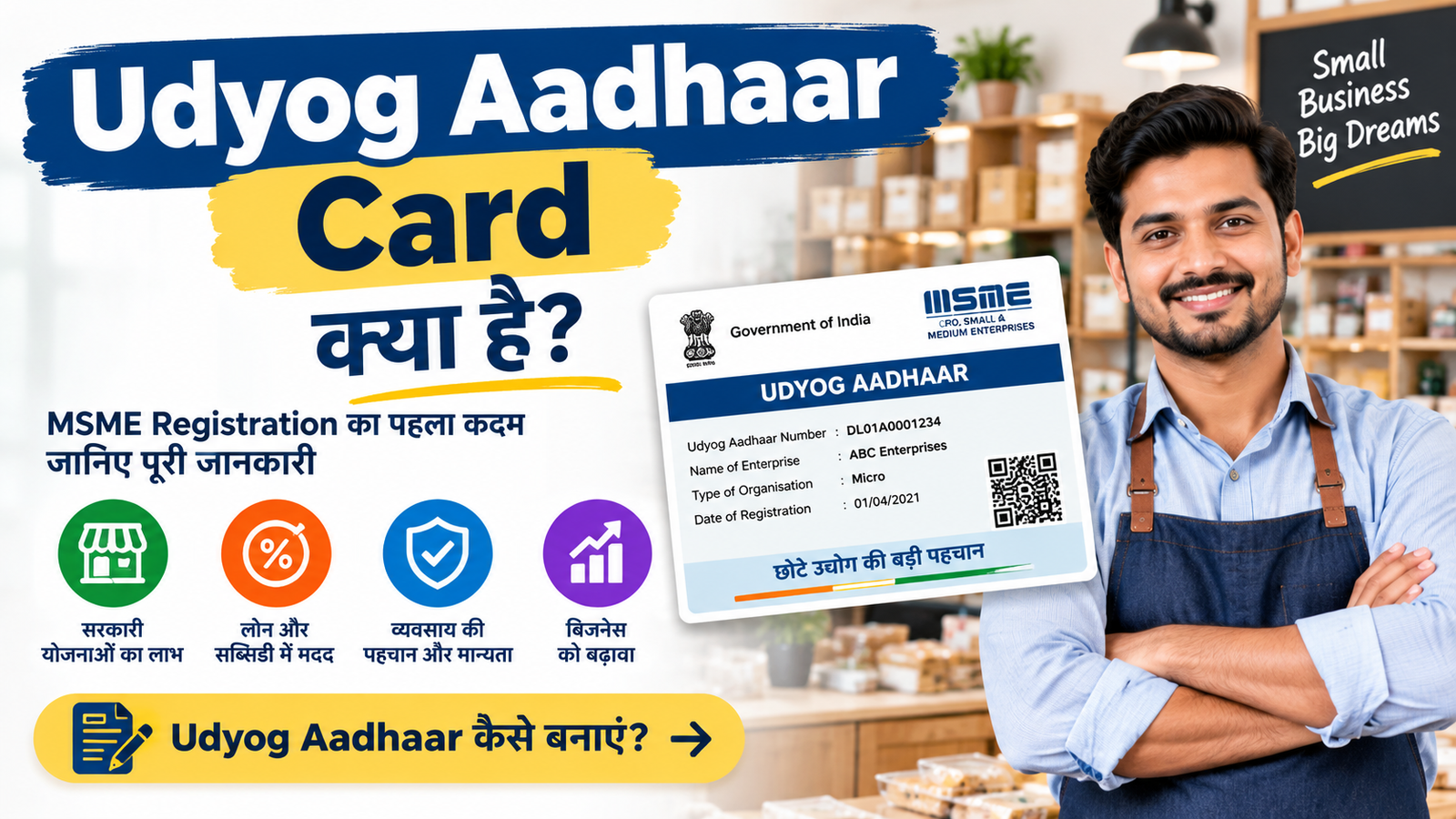
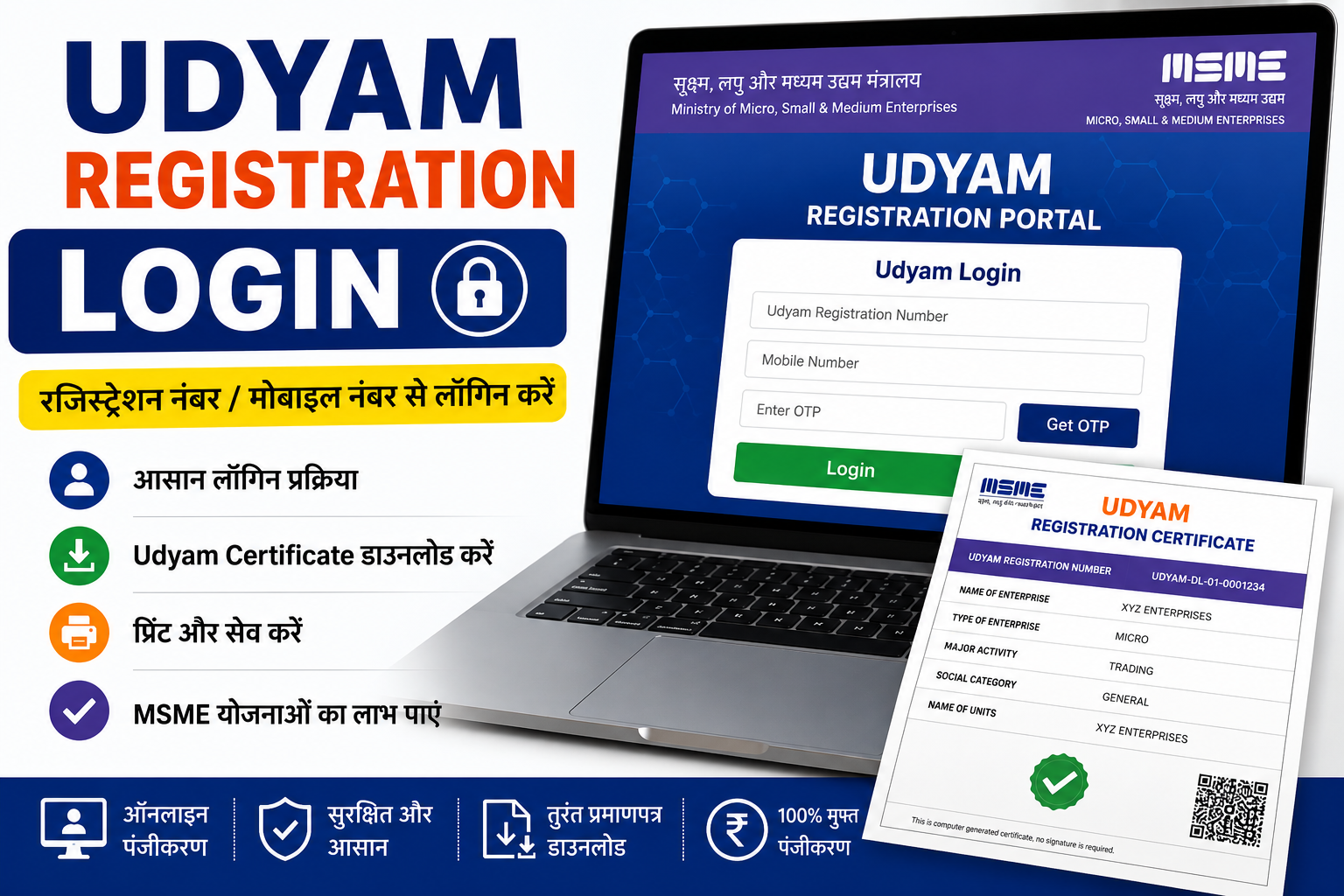
For anyone planning to start or expand a small business, training can be as valuable as formal registration. However, it is important to understand one point clearly: an MSME training certificate is not the same as Udyam Registration. Udyam Registration gives a business its official MSME identity, while an MSME course certificate shows that a person has completed a particular training programme.
The Ministry’s training ecosystem includes long-term diploma and certificate programmes, short-term technical courses, entrepreneurship development programmes and customized industry training. Official sources list hundreds of course options across Technology Centres, including NSQF-aligned, AICTE/SCVT/NCVT-linked, and short-term/tailor-made programmes.dcmsme.gov
MSME training courses: What are they?
MSME training courses are skill-development and entrepreneurship programmes conducted through institutions connected with the Ministry of Micro, Small and Medium Enterprises, Government of India. The purpose is to improve employability, create entrepreneurs, upgrade workforce skills and help small enterprises adopt modern technology.
These programmes may be offered through:
-
MSME Technology Centres
-
Central Tool Room and Training Centre units
-
Tool Rooms and Technology Development Centres
-
MSME Development and Facilitation Offices
-
National Institute for MSME (ni-msme)
-
National Small Industries Corporation and related institutions
-
Entrepreneurship and Skill Development Programme centres
-
Recognised partner institutions, where applicable
The Ministry describes Technology Centres as institutions that conduct long-term diploma and certificate courses, specialized high-technology programmes for engineering graduates, skill-upgradation training for industry personnel, trainer-upgradation courses and customised programmes for industries.dcmsme
The exact course list, fee, admission dates, duration, eligibility and delivery mode can differ from one centre to another. Therefore, applicants should always verify the latest notification directly on the official website of the relevant MSME Technology Centre or training institute.
MSME training centre: Where can you study?
MSME training centre options are available across India through a network of Technology Centres, formerly called Tool Rooms and Technology Development Centres. These centres focus heavily on technical training, manufacturing support, design, automation, product development and industry-oriented skills.
Some prominent institutions listed by the Ministry include:
-
Central Tool Room & Training Centre, Bhubaneswar
-
Central Tool Room & Training Centre, Kolkata
-
Indo Danish Tool Room, Jamshedpur
-
Indo German Tool Room, Aurangabad
-
Indo German Tool Room, Indore
-
Indo German Tool Room, Ahmedabad
-
Central Institute of Tool Design, Hyderabad
-
Central Institute of Hand Tools, Jalandhar
-
Institute for Design of Electrical Measuring Instruments, Mumbai
-
Process and Product Development Centre, Agra
-
Central Tool Room, Ludhiana
-
Tool Room & Training Centre, Guwahati
-
Central Footwear Training Institute centres in Agra and Chennai
-
Fragrance and Flavour Development Centre, Kannaujmsme
These centres do not necessarily run every programme all year. A student looking for an MSME AutoCAD course, MSME CNC programming course, MSME bakery course or MSME EV charging station training should search the current calendar or contact the specific centre before applying.
MSME training courses list: Popular course categories
MSME training courses list can include entrepreneurship, technical, manufacturing, computer, service-sector and product-based programmes. The official standardized course list has included subjects such as bakery products, CAD/CAM, CNC machining, Tally, PLC programming, food processing, fashion designing, beautician training, soap and detergent production, mobile repairing and more.dcmsme
Below is a useful category-wise list for your blog readers.
For example, official trainee listings have shown indicative durations such as 250 hours for CAD/CAM, 300 hours for CNC Lathe Wire Cut Milling, 250 hours for computer accounting with Tally and 125 hours for bakery products. Course duration and curriculum should still be checked against the current notification.ati.msme
MSME online courses: Are courses available online?
MSME online courses are available for selected subjects, workshops, webinars and short-duration training programmes, but not every technical course can be completed fully online. Hands-on fields such as CNC machining, tool making, CAD/CAM practicals, welding, machine maintenance and laboratory testing usually need physical practice at a training centre.
Online or hybrid learning may be more suitable for:
-
Digital marketing course by MSME
-
Entrepreneurship and business-management training
-
GST and accounting awareness programmes
-
Export-import orientation programmes
-
Quality-management and productivity sessions
-
Lean Six Sigma theory modules
-
Project-management learning
-
Cybersecurity or digital-skills awareness
-
Training of Trainers and Training of Assessors programmes
-
Business communication, e-commerce and office productivity
An MSME Technology Centre training calendar has also listed online programmes, including Training of Assessors and Training of Trainers sessions conducted by CTTC Bhubaneswar.msmetcerp.cttc
Before joining an MSME online certificate course, applicants should confirm:
-
Whether the course is fully online, hybrid or classroom-based
-
Whether practical training is compulsory
-
The name of the issuing institution
-
Course duration and attendance requirements
-
Examination or assessment process
-
Certificate conditions
-
Fee, refund policy and payment method
-
Whether the programme is currently open for admission
Do not assume that every course advertised online using the words “MSME certified” is directly conducted by the Ministry of MSME.
MSME certificate course: Is it government-recognised?
MSME certificate course recognition depends on the actual institution, programme structure and certificate issuer. A certificate issued by an MSME Technology Centre, Tool Room or a recognised Ministry-linked institution carries different value from a certificate offered by a private academy using similar marketing language.
A genuine learner should look for the following details before enrolling:
-
Official institution name and website domain
-
Government or institutional affiliation stated clearly
-
Admission notice or training calendar
-
Course objective, eligibility and duration
-
Whether the certificate is issued after attendance, assessment or examination
-
Availability of institute contact details and physical address
-
Clear receipt and fee documentation
There are also professional courses that use the MSME subject area rather than being technical courses of the Ministry itself. For instance, ICAI has conducted a virtual “Certificate Course on MSME” for its professional audience. Such a course should not be confused with Udyam Registration Portal , a Ministry-run technical course or a universal government licence.msme.icai
A certificate can improve skills and credibility, but it does not automatically guarantee a job, loan approval, government tender eligibility or business success.
MSME technology development centre courses: Technical skills for industry
MSME Technology Development Centre courses are particularly relevant for candidates interested in manufacturing, design, automation, machine tools, product development and industrial technology. These institutions are commonly known as MSME Technology Centres today, while many people still search using terms such as MSME Tool Room, Central Tool Room and Training Centre, or Technology Development Centre.
The Ministry’s skill-training documentation states that Technology Centres conduct a mix of NSQF-compliant courses, AICTE/SCVT/NCVT-related courses and tailor-made or short-term courses.dcmsme.gov
Depending on the centre and its current intake, learners may find programmes related to:
-
MSME AutoCAD course and engineering drawing with CAD
-
MSME CAD CAM courses
-
MSME CNC courses and CNC programming course
-
Tool and die making
-
Mechatronics and machine maintenance
-
PLC training and industrial automation
-
Electrical and electronics servicing
-
Product design and prototyping
-
Quality control and inspection
-
Welding, fabrication and manufacturing processes
-
Solar PV installation
-
Footwear technology and manufacturing
-
Electronics and embedded systems
-
Artificial intelligence, data analysis and digital manufacturing
The MSME Technology Centre ecosystem has published qualifications such as Assistant Tool Maker, Data Analysis Associate, Artificial Intelligence Application Developer, Solar PV Installer and Technician–Machine Maintenance (Mechatronics).msmetcerp.cttc
Central Tool Room and Training Centre: Why it matters
Central Tool Room and Training Centre institutions are among the most recognised MSME training centres for technical education and industry-oriented skills. They typically focus on practical learning using machinery, design software, workshops, laboratories and industrial processes.
These centres can be a strong option for:
-
Students after Class 10 or Class 12
-
ITI pass-outs
-
Diploma holders
-
Engineering graduates
-
Working technicians
-
Employees seeking upskilling
-
Entrepreneurs setting up manufacturing units
-
MSMEs training their workforce
A learner interested in an MSME tool room diploma should verify whether the centre offers a long-term diploma, certificate, post-diploma or short-term module. Eligibility can vary significantly. Some programmes may require Class 10, ITI, diploma or engineering qualifications, while short-term entrepreneurship or basic skill courses may have more flexible entry criteria.
Practical technical training can be especially helpful for Udyam-registered manufacturing businesses because improved machine operation, tooling, production quality and maintenance can reduce waste and improve competitiveness.
MSME digital marketing course: A useful option for businesses
MSME digital marketing course demand is growing because small businesses now need a visible online presence. Even a local bakery, tailor, food-processing unit, beautician, retailer, manufacturer or service provider can use digital channels to attract customers and build trust.
A good digital-marketing training programme may cover:
-
Website basics and business landing pages
-
Search engine optimisation
-
Google Business Profile management
-
Social-media marketing
-
Content writing and copywriting
-
WhatsApp Business communication
-
Paid advertising basics
-
Lead generation
-
E-commerce marketplace basics
-
Email marketing
-
Analytics and reporting
-
Online reputation management
For an Udyam-registered business, these skills can support customer acquisition, local visibility and brand building. However, course participants should understand that digital marketing is not a one-time activity. Results depend on consistent content, a reliable product or service, correct customer targeting and regular performance tracking.
MSME GST certification course: What to know
MSME GST certification course searches are common among business owners, accountants and job seekers. GST knowledge is useful for invoicing, return-related work, input tax credit awareness, record keeping and communication with tax professionals.
However, it is important not to make misleading claims. Completing a GST course does not automatically authorise a person to represent taxpayers in every legal or professional capacity. The role of a GST Practitioner and related eligibility or enrolment requirements are governed by GST law and the GST portal process, not merely by a course certificate.
An MSME GST training programme can be useful for learning:
-
GST registration basics
-
Tax invoices and e-invoicing concepts
-
HSN and SAC understanding
-
Input tax credit basics
-
Return terminology
-
Bookkeeping and reconciliation
-
Small-business compliance practices
-
Tally and GST-related accounting workflows
Choose a course based on curriculum quality and the credibility of the provider, rather than claims such as “guaranteed GST practitioner licence” or “100% government certification.”
MSME Six Sigma Black Belt course: Quality and productivity training
MSME Six Sigma Black Belt course and MSME Six Sigma Green Belt certification are popular among professionals and manufacturing businesses because they focus on improving quality, reducing defects and making processes more efficient.
Lean and Six Sigma concepts can help an MSME identify unnecessary steps, delays, errors, rework and material wastage. For example, a small packaging unit may use process mapping to discover why dispatch is delayed or why too many products are rejected during quality checks.
Common levels include:
-
Yellow Belt: Basic awareness of improvement methods
-
Green Belt: Team-level problem solving and project participation
-
Black Belt: Advanced analysis, improvement projects and leadership
-
Lean training: Focus on removing waste and improving workflow
Before joining a Lean Six Sigma certification MSME course, check who issues the certificate, whether projects are included, whether software or statistical tools are taught and whether the course is appropriate for your experience level. A short online module and a rigorous project-based Black Belt programme should not be treated as equal.
MSME skill development courses: Opportunities for self-employment
MSME skill development courses are particularly valuable for people who want to start a small enterprise rather than only seek a job. Areas such as bakery products, food processing, soap making, tailoring, beautician services, candle making, mushroom cultivation, artificial jewellery and computer services can be converted into local business opportunities when combined with market research and financial planning.
For example, a person completing food-processing or bakery training should not immediately invest heavily in equipment. A practical approach is to begin with:
-
Identifying local demand and target customers
-
Learning food-safety and packaging requirements
-
Calculating raw-material and packaging costs
-
Testing products in small batches
-
Creating a brand name and basic online presence
-
Applying for the appropriate food-business registration or licence, if required
-
Obtaining Registration once the enterprise is established or eligible
Training builds capability, but registration and compliance make the business more formal, credible and ready to access applicable MSME benefits.
MSME training and Udyam Registration: Key difference
MSME training and Udyam Registration serve different purposes, but they can work together for an entrepreneur.
If you want to launch a manufacturing, trading or service business after completing an MSME course, Udyam Registration can be an important next step. It helps establish your business as a micro, small or medium enterprise under the official MSME framework, subject to eligibility and applicable rules.
MSME free courses online: Be careful before applying
MSME free courses online may be available occasionally through official initiatives, sponsored programmes, workshops or limited-seat training calendars. But “free” does not always mean that every learner receives free accommodation, study material, assessment, certificate or practical training.
Check these details first:
-
Is the course officially announced by an MSME institution?
-
Is the fee truly zero, subsidised or refundable?
-
Is there a separate examination or certificate fee?
-
Is selection based on merit, category, location or eligibility?
-
Is physical attendance required?
-
Does the programme have limited seats?
-
Is the website official and secure?
Never pay money to an individual WhatsApp number merely because they promise an “MSME free certificate” or “guaranteed government job after training.” Use only verified institutional channels and retain all payment receipts and admission documents.
Frequently Asked Questions
MSME courses: Are they only for Udyam-registered businesses?
No. MSME training programmes can be open to students, job seekers, ITI/diploma holders, working professionals and aspiring entrepreneurs; eligibility varies by course and institute. The Ministry’s training system serves learners ranging from school dropouts to M.Tech graduates. Source: Ministry of MSME Annual Reportmsme.gov
MSME course certificate: Is it valid for government jobs?
An MSME course certificate can strengthen your skills and profile, but it does not automatically qualify you for a government job. You must meet the educational, age, technical and other conditions in the relevant recruitment notification. Source: Ministry of MSME training ecosystemdcmsme.gov
MSME AutoCAD course: Can beginners apply?
Yes, beginners may apply for basic CAD or AutoCAD programmes if the course eligibility allows it. Advanced CAD/CAM or design programmes may require ITI, diploma or engineering knowledge. Source: MSME trainee programme listingsati.msme.gov
MSME gold appraisal training: Is it available everywhere?
No. Gold appraisal training is not necessarily available at every MSME Technology Centre or Tool Room. Check the latest course calendar, curriculum, fee and certificate issuer at the specific institute before enrolment. Source: Ministry of MSME training institutesmsme.gov
MSME EV charging station training: Is it useful for a business?
Yes, EV charging training can help you understand charging infrastructure, equipment, safety and business operations. Actual charging-station setup may additionally require site-specific electrical, utility, local-authority and commercial compliance. Source: MSME Technology Centre skill programmesmsmetcerp.cttc.gov
MSME certification courses: Are all online advertisements genuine?
No. Verify the official institute website, physical address, course notice, fee receipt, admission process and certificate issuer before paying. For Udyam-related services, the government confirms that its official portal is the only authorised MSME registration portal. Source: Official Udyam Registration Portaludyamregistration.gov
MSME online courses: Are all courses fully online?
No. Digital marketing, entrepreneurship, quality management and awareness programmes may be online or hybrid, while CNC, CAD/CAM, machining and other technical courses often require practical classroom or workshop training. Source: DC MSME vocational training informationdcmsme.gov
MSME free courses online: Are they completely free?
Not always. Some programmes may be free, sponsored or subsidised, but applicants should check whether certificate, examination, material, accommodation or practical-training charges apply. Source: MSME skill training ecosystemdcmsme.gov
MSME training certificate: Does it guarantee a job?
No. A training certificate shows course completion or skill assessment, but employment depends on your practical skills, experience, interview performance and employer requirements. Source: Ministry of MSME Annual Reportmsme.gov
MSME CNC programming course: Who can join?
Eligibility depends on the centre and course level. CNC training is generally suitable for ITI students, diploma holders, engineering learners, machine operators and technicians seeking manufacturing skills. Source: MSME trainee programme listingsati.msme.gov
MSME digital marketing course: Is it useful for small businesses?
Yes. Digital marketing training can help MSMEs improve online visibility through SEO, social media, local listings, content marketing, e-commerce and customer communication. Course availability and curriculum differ by institute. Source: MSME e-learning platformmsmeonline
MSME GST certification course: Can I become a GST Practitioner after completing it?
Not automatically. A GST course may build practical knowledge, but GST Practitioner enrolment requires meeting the eligibility conditions and applying through the GST system under the applicable rules. Source: CBIC GST Practitioner FAQscbic-gst.gov
MSME Six Sigma Green Belt certification: Is it useful for manufacturing businesses?
Yes. Lean Six Sigma learning can help MSMEs reduce waste, defects, rework and process delays. Check whether the programme includes practical projects, trainer credentials and a recognised certificate issuer. Source: MSME Technology Centre training calendarmsmetcerp.cttc.gov
MSME food processing courses: Can they help in starting a business?
Yes. Food-processing training can help entrepreneurs understand production, packaging, hygiene, costing and basic business planning. You may also need to follow applicable food-safety and business-registration requirements before selling products. Source: Standardised MSME course listdcmsme.gov
MSME courses and Udyam Registration: Are they the same thing?
No. An MSME course certificate is issued to an individual after training, while Udyam Registration is the official MSME registration for an eligible business or enterprise. Udyam Registration is free, online and based on self-declaration through the official government portal. Source: Official Udyam Registration Portal
Final thoughts
MSME training courses can be a practical starting point for anyone seeking technical skills, self-employment opportunities or better business capability. Whether your interest is an MSME digital marketing course, MSME CNC programming course, MSME food processing training, GST learning, AutoCAD, PLC, Six Sigma or entrepreneurship development, choose the programme based on your career goal and the credibility of the institute.
For entrepreneurs, the strongest combination is simple: gain a relevant skill, validate your business idea, complete essential legal compliance, and obtain Udyam Registration for your eligible enterprise. Training improves what you can do; Udyam Registration strengthens the formal identity of what you build.