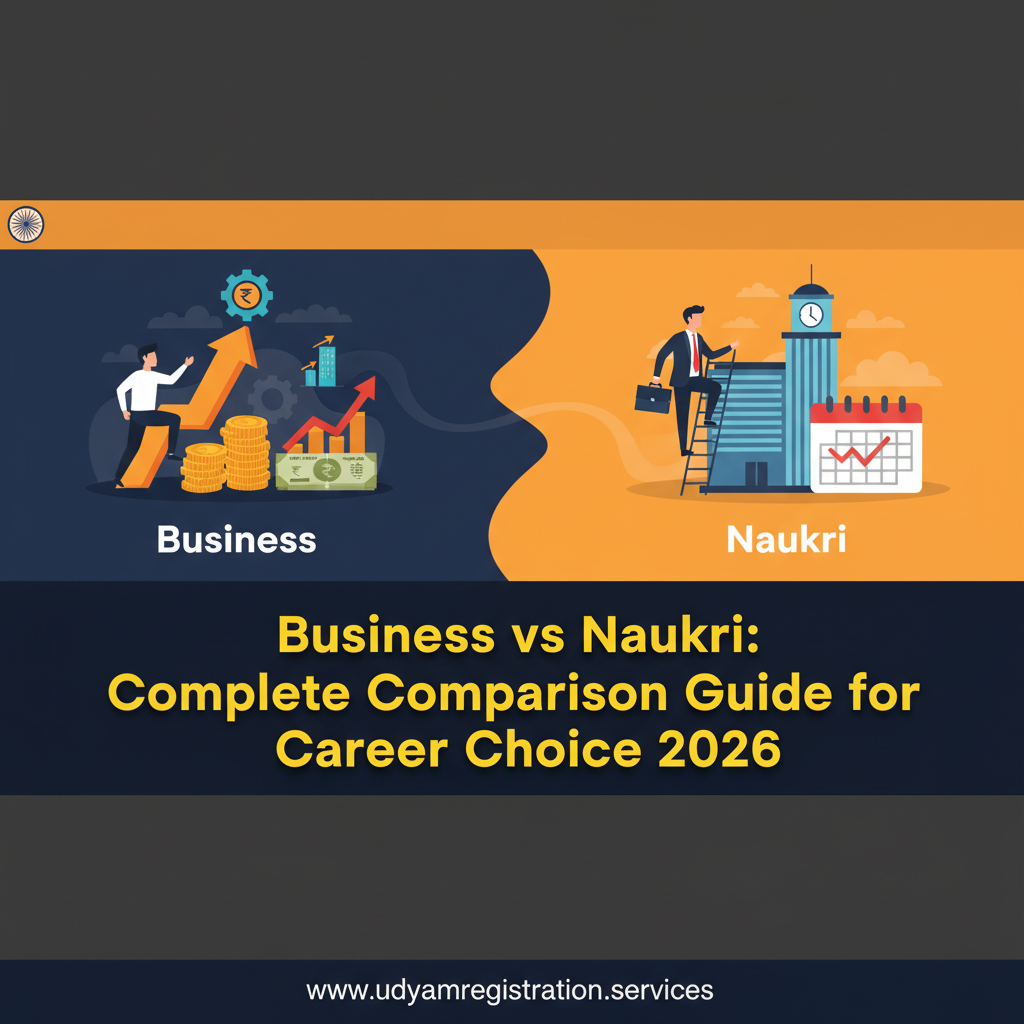
Business vs Naukri: Complete Comparison Guide for Career Choice 2026
Business vs Naukri: Introduction - Career Dilemma of Modern India
In modern India (2025-26), the choice between pursuing a business venture ('Vyapar') and securing a traditional job ('Naukri') represents a significant career dilemma. While 'Naukri' offers perceived stability and structured growth, 'Business' promises autonomy, higher earning potential, and contribution to economic growth, often supported by various government initiatives for entrepreneurship.
The Indian economy, poised for robust growth in 2025-26, continues to present a compelling paradox for its burgeoning workforce: the age-old choice between the stability of a job ('Naukri') and the dynamic potential of entrepreneurship ('Business'). This dilemma is particularly pronounced today, influenced by rapid technological advancements, evolving employment landscapes, and a strong governmental push towards self-reliance and innovation, making the decision more complex than ever for millions of aspiring professionals and young graduates.
Historically, a 'Naukri', especially in the government sector or a large corporate, has been the preferred and often revered path in India, celebrated for its job security, predictable income, and social prestige. Parents often steered their children towards stable professions, reinforcing the belief that a steady paycheck was paramount. This cultural inclination fostered a generation that valued incremental career growth within established organizational structures, prioritizing risk aversion over entrepreneurial ambition. The formal sector's growth, particularly in IT, manufacturing, and services, has continuously absorbed a significant portion of the workforce, offering structured career paths and employee benefits.
However, the narrative began to shift dramatically in the early 21st century and has accelerated into 2025-26. India's economic liberalization, coupled with a booming digital ecosystem and initiatives like Startup India (startupindia.gov.in) and Make in India, has democratized entrepreneurship. No longer confined to traditional family enterprises, starting a business has become an aspirational pursuit for many, fueled by stories of successful startups and the allure of creating impact. Government policies have actively encouraged this transition, recognizing the MSME sector as a pivotal engine for job creation and economic growth. The Ministry of MSME (msme.gov.in) reports indicate that micro, small, and medium enterprises contribute significantly to the nation's GDP and exports, underscoring their vital role.
The modern Indian professional now faces a unique set of considerations. A 'Naukri' offers structured skill development, a clear hierarchy for advancement, and often, a comprehensive benefits package, including health insurance and provident fund contributions, regulated by bodies like EPFO (epfindia.gov.in). The formal employment sector is expanding, with new opportunities emerging in sunrise industries and established sectors alike. Conversely, 'Business' provides unparalleled freedom, the potential for exponential wealth creation, and the satisfaction of building something from the ground up. However, it also demands high-risk tolerance, significant initial capital, and a relentless commitment to navigating market uncertainties, regulatory hurdles, and intense competition. The journey often involves long hours, financial instability in the initial years, and the responsibility of leading a team and managing operational complexities. The choice is thus not merely about income, but about lifestyle, risk appetite, personal aspirations, and the desired impact on the wider economy.
Key Takeaways
- The career choice between a job ('Naukri') and business ('Vyapar') in India is increasingly complex in 2025-26 due to economic growth and evolving career aspirations.
- Historically, 'Naukri' was preferred for its perceived stability, security, and social prestige.
- Modern India has seen a significant shift towards entrepreneurship, driven by government initiatives like Startup India and the growth of the digital economy.
- The MSME sector plays a crucial role in India's economy, contributing significantly to GDP and employment, highlighting the importance of business ventures (msme.gov.in).
- 'Naukri' offers structured growth, benefits, and predictable income, while 'Business' provides autonomy, higher earning potential, and direct economic contribution.
- The decision often hinges on individual risk appetite, personal values, and long-term career goals in the context of a dynamic Indian economy.
Business Kya Hai vs Naukri Kya Hai: Definitions and Core Differences
Business (व्यापार) involves creating and managing an enterprise to provide goods or services, aiming for profit through inherent risk and independent decision-making. Naukri (नौकरी) refers to employment where an individual works for an employer, receiving a fixed salary or wages in exchange for their labor, with limited direct control over the organization's strategic direction. The core difference lies in ownership, risk bearing, and the nature of income.
In India, the choice between entrepreneurship and employment remains a pivotal career decision for millions, with both paths offering distinct opportunities and challenges. As of 2025-26, India's MSME sector, a major contributor to business, continues to grow, attracting new entrepreneurs, while the organized sector also sees substantial job creation, reflecting a dynamic labor market. Understanding the fundamental distinctions between running a business and working a job is crucial for informed career planning.
Defining Business
A business, in its essence, is an economic activity focused on providing goods or services to customers with the primary goal of generating profit. It involves the allocation of resources, strategic decision-making, and the assumption of financial and operational risks. An individual starting a business, often referred to as an entrepreneur, typically has full ownership and control over their venture. Businesses can take various legal forms, such as a Sole Proprietorship, Partnership, Limited Liability Partnership (LLP) under the LLP Act 2008, or a Private Limited Company as per the Companies Act 2013. For micro, small, and medium enterprises (MSMEs), obtaining Udyam Registration is a key step, as defined under the MSMED Act 2006 and further simplified by Gazette Notification S.O. 2119(E) dated 26 June 2020, offering access to numerous government benefits. Compliance requirements like GST registration, mandated under the GST Act for businesses exceeding specific turnover thresholds, are also integral aspects of operating a formal business. The income from a business is directly tied to its performance and profitability, fluctuating with market conditions and operational efficiency.
Defining Naukri (Employment)
Naukri, or employment, involves an individual performing specific duties and responsibilities for an employer in exchange for a predetermined salary or wages. In this arrangement, the employee operates within an established organizational structure, adhering to the employer's rules, policies, and directives. The primary objective of an employee is to contribute to the employer's goals and receive stable, often fixed, remuneration. Employees typically do not bear the direct financial risks of the organization and have limited or no ownership stake. Legal frameworks governing employment include labor laws, service agreements, and tax regulations like the Income Tax Act 1961, which outlines how salaried income is taxed. Benefits such as Provident Fund (PF) contributions through the Employees' Provident Funds and Miscellaneous Provisions Act, 1952, and Employees' State Insurance (ESI) are often part of the compensation package for employees in the organized sector, managed by organizations like EPFO. The income from naukri is generally stable and predictable, providing financial security but with a cap on earning potential directly linked to the role and salary structure.
Key Differentiators: Business vs. Naukri
- Ownership and Control: Business owners possess complete autonomy over their ventures, dictating strategy and operations. Employees, conversely, operate under an employer's direction, following established organizational hierarchies and policies.
- Risk and Reward: Entrepreneurs assume significant financial and operational risks, yet gain unlimited potential for profit and wealth creation. Employees face minimal direct financial risk, enjoying stable income but with earning potential capped by salary structures and promotions.
- Income Stability and Potential: Business income is inherently variable, fluctuating with market performance and profitability, though offering unbounded growth. Naukri provides stable, predictable income, ensuring financial security but with typically incremental growth linked to the role.
- Work-Life Balance: Entrepreneurs often experience blurred lines between work and personal life, especially during initial growth phases. Employees usually have more structured work hours and a clearer separation of professional and personal time.
- Legal Formalities and Compliance: Businesses must navigate extensive legal and regulatory compliances, from company registration (e.g., under Companies Act 2013) to tax filings like GST. For employees, most legal and compliance burdens, such as PF/ESI contributions, are managed by the employer.
- Scalability and Growth: Businesses offer significant potential for scalability and market expansion, allowing for exponential growth. Career growth in employment is generally confined to promotions within the existing organizational framework or through job changes.
Key Takeaways
- Business involves entrepreneurial activity driven by profit, ownership, and significant risk-taking, requiring compliance with acts like the Companies Act 2013 or MSMED Act 2006.
- Naukri (employment) entails working for an employer in exchange for a stable salary, with less personal financial risk and adherence to employer directives and labor laws.
- Entrepreneurs gain full control and unlimited profit potential, but face higher financial and operational risks.
- Employees benefit from income stability and defined work hours but have limited direct control and capped earning potential.
- Legal frameworks like the GST Act are crucial for business operations, while the Income Tax Act 1961 governs salaried income taxation.
- The choice between business and naukri depends on an individual's risk appetite, desire for autonomy, and financial goals for 2025-26 and beyond.
Who Should Choose Business vs Who Should Choose Naukri: Eligibility Assessment
Choosing between business and a job (naukri) depends on an individual's risk appetite, financial resources, skill set, and long-term aspirations. Entrepreneurship suits those with a high tolerance for risk, innovative spirit, and self-starter mentality, often requiring significant initial capital and compliance with regulations like Udyam Registration. A job offers stability, predictable income, and benefits, appealing to those who prefer structured growth and minimal personal financial liability.
In India, the career landscape in 2026 presents a dynamic choice between building a business and pursuing a job. As the economy diversifies, more individuals are weighing the benefits and challenges of entrepreneurship against the security and structured growth of traditional employment. Understanding personal eligibility factors is crucial for making an informed decision that aligns with one's professional and financial goals.
The decision to embark on an entrepreneurial journey or to seek stable employment is deeply personal, influenced by a multitude of factors ranging from individual personality traits to external economic conditions. Assessing one's eligibility for either path involves a candid evaluation of various attributes and circumstances.
For Business (Entrepreneurship):
Individuals suited for business typically possess a strong entrepreneurial spirit, characterized by:
- High-Risk Tolerance: Business inherently involves financial and operational risks. Entrepreneurs must be comfortable with uncertainty and potential setbacks.
- Innovation and Problem-Solving: Identifying market gaps, developing new products or services, and continuously adapting to change are core to business success.
- Self-Motivation and Discipline: Without a traditional reporting structure, entrepreneurs must be highly self-driven and disciplined to manage their ventures effectively.
- Leadership and Team Building: As a business grows, the ability to lead, delegate, and inspire a team becomes paramount.
- Financial Acumen and Access to Capital: Starting a business often requires significant initial investment. Entrepreneurs need to understand financial management, secure funding (e.g., through schemes like PMEGP for manufacturing/service projects up to Rs 25L/10L respectively, or CGTMSE for collateral-free loans up to Rs 5 crore from SIDBI), and manage cash flow effectively. Sources like kviconline.gov.in and sidbi.in provide details on such support.
- Regulatory Compliance Knowledge: Operating a business in India requires adherence to various legal frameworks, including registering as an MSME under the Udyam Registration (Gazette S.O. 2119(E), 26 June 2020) and obtaining GSTIN if turnover exceeds specified limits (Rs 40L for goods, Rs 20L for services).
- Long-Term Vision and Patience: Building a successful business often takes time, perseverance, and a long-term strategic outlook.
For Naukri (Employment):
Individuals who thrive in employment environments often value:
- Stability and Predictable Income: A job offers a fixed salary, which provides financial security and aids in personal budgeting and long-term planning.
- Defined Career Path: Many organizations offer clear career progression paths, training opportunities, and scope for professional development within a structured environment.
- Work-Life Balance (Potentially): While demanding, jobs often come with defined working hours, paid leave, and benefits, potentially offering a more predictable work-life balance compared to the all-encompassing nature of early-stage entrepreneurship.
- Benefits and Perks: Employees typically receive benefits such as health insurance (often covered under Section 80D for tax benefits), provident fund (EPF, 12% employer contribution as per epfindia.gov.in), and gratuity, which contribute to overall financial well-being.
- Specialized Skill Focus: Employees can often focus on honing specific skills within their role, rather than managing all aspects of a business.
- Reduced Personal Financial Risk: The financial risks associated with business failures are borne by the company, not directly by the employee.
The choice ultimately hinges on a match between an individual's inherent characteristics, aspirations, and the demands of each path. India's evolving economic landscape, with increasing support for MSMEs and a robust job market in various sectors, offers ample opportunities for both entrepreneurs and job seekers.
Comparative Assessment: Business vs. Naukri Suitability
| Factor | Suitable for Business | Suitable for Naukri (Employment) |
|---|---|---|
| Risk Tolerance | High (comfort with uncertainty and potential losses) | Low to Medium (prefers security and predictable outcomes) |
| Financial Commitment | High (initial investment, working capital, personal financial stake) | Low (minimal personal financial risk beyond living expenses) |
| Autonomy & Control | High (desires full control over decisions and direction) | Medium to Low (comfortable with organizational structure and delegated tasks) |
| Work-Life Balance | Often unpredictable, long hours initially, integration of work and life | Generally more structured with defined hours and holidays |
| Skill Set Focus | Versatile (management, finance, marketing, operations, strategy) | Specialized (deep expertise in a particular domain or function) |
| Growth & Impact | Potential for exponential growth, direct societal impact through innovation | Structured career progression, impact within organizational boundaries |
| Legal & Regulatory Burden | High (Udyam, GST, Companies Act 2013, labor laws) | Low (adherence to company policies, personal tax compliance) |
| Income Pattern | Variable, profits fluctuate, no guaranteed salary | Fixed salary, regular increments, bonuses |
| Source: Analysis based on general career planning principles and Indian business environment. | ||
Key Takeaways
- Choosing between business and naukri requires a thorough self-assessment of one's risk appetite and financial capacity.
- Entrepreneurs need innovation, leadership skills, and an understanding of regulatory compliance such as Udyam Registration and GST.
- Individuals preferring a job value stability, predictable income, and benefits like EPF and health insurance.
- Government initiatives like PMEGP and CGTMSE provide crucial financial support for aspiring entrepreneurs, reducing some initial hurdles.
- Work-life balance and the nature of daily tasks differ significantly, with business often demanding more integrated work-life initially.
- The long-term vision for personal growth and societal impact should guide the decision-making process.
Step-by-Step Process: How to Start Your Own Business vs How to Build a Career in Job
Starting a business involves conceptualizing an idea, securing funding, establishing a legal entity through registrations like Udyam and GST, and then scaling operations. Building a career in a job, conversely, focuses on education, skill acquisition, strategic job searching, securing employment, and continuous professional development for growth within an organizational structure.
In 2025-26, India's dynamic economy presents diverse paths for professionals, with a noticeable surge in entrepreneurial ventures alongside established career opportunities. Aspiring individuals often weigh the autonomy and potential high rewards of starting a business against the stability and structured growth offered by a job. Understanding the distinct step-by-step processes for each path is crucial for making an informed career choice.
Steps to Launch Your Business in India
Embarking on an entrepreneurial journey requires careful planning and adherence to regulatory frameworks. The process, while challenging, offers immense potential for innovation and economic contribution, especially with government initiatives supporting MSMEs and startups.
- Idea Generation and Market Research: Identify a viable business concept that addresses a market need. Conduct thorough market research to understand your target audience, competition, and potential demand for your product or service.
- Business Plan Development: Create a comprehensive business plan outlining your vision, mission, market analysis, operational structure, financial projections, and marketing strategies. This document is vital for securing funding and guiding your venture.
- Funding Acquisition: Explore various financing options such as self-funding, angel investors, venture capitalists, or government schemes like the Pradhan Mantri Employment Generation Programme (PMEGP) for manufacturing and service units (kviconline.gov.in), or MUDRA loans for micro-enterprises (mudra.org.in).
- Choose a Legal Structure: Decide on the appropriate legal entity for your business. Common structures include Sole Proprietorship, Partnership Firm, Limited Liability Partnership (LLP) under the LLP Act 2008, or Private Limited Company under the Companies Act 2013. Each structure has different liability, compliance, and tax implications.
- Registration and Licensing:
- Udyam Registration: If classified as a Micro, Small, or Medium Enterprise (MSME) as per Gazette Notification S.O. 2119(E) dated 26 June 2020, register for Udyam online at udyamregistration.gov.in. This is free and provides access to various government benefits.
- GST Registration: Obtain a Goods and Services Tax Identification Number (GSTIN) if your turnover exceeds the threshold (currently Rs 40 lakh for goods, Rs 20 lakh for services) as mandated by the GST Act.
- Shop & Establishment Act: Register with the local municipal corporation under the respective State's Shop & Establishment Act.
- Other Licenses: Depending on the industry, acquire specific licenses such as FSSAI for food businesses or an Import Export Code (IEC) from DGFT for international trade.
- Bank Account and Compliance: Open a dedicated bank account for your business. Establish robust accounting practices and ensure ongoing compliance with tax regulations, annual filings with MCA (for companies/LLPs), and labor laws.
- Operations and Marketing: Set up your physical or digital infrastructure, hire staff, and begin operational activities. Implement your marketing and sales strategies to reach customers and build your brand.
Navigating Your Career Path in a Job
A career in a job offers a structured path with opportunities for professional development, skill enhancement, and financial stability. The journey typically involves strategic planning and continuous effort to advance.
- Education and Skill Development: Acquire relevant educational qualifications, certifications, and in-demand skills aligned with your desired industry or role. Continuous learning is paramount in a rapidly evolving job market.
- Build a Professional Network: Connect with professionals in your field through industry events, online platforms, and informational interviews. Networking can open doors to new opportunities and provide valuable insights.
- Craft a Strong Resume and Portfolio: Develop a well-structured resume highlighting your education, skills, experience, and achievements. For creative or technical roles, a professional portfolio showcasing your work is essential.
- Targeted Job Search: Identify suitable job openings through online job portals, company career pages, professional networking sites, and recruitment agencies. Tailor your applications to each specific role.
- Interview Preparation and Execution: Prepare for interviews by researching the company and role, practicing common questions, and refining your communication skills. Present yourself professionally and confidently.
- Acceptance and Onboarding: Review job offers carefully, negotiate terms if applicable, and formally accept the position. Engage actively during the onboarding process to understand company culture and responsibilities.
- Career Progression and Continuous Learning: Once employed, focus on excelling in your role, taking initiative, and seeking opportunities for growth. Pursue further education, certifications, and mentorship to advance your career ladder and stay relevant in the job market.
Key Takeaways
- Starting a business requires extensive legal registrations, including Udyam and GST, and adherence to Acts like the Companies Act 2013 or LLP Act 2008.
- Government schemes like PMEGP and MUDRA provide financial assistance for new businesses in India, easing the initial capital burden.
- A job career emphasizes education, continuous skill development, strategic networking, and consistent performance within an organizational framework.
- Entrepreneurs bear full financial risk and responsibility for compliance, while employees typically benefit from structured income and benefits.
- Both paths demand dedication and continuous learning, but a business offers autonomy and direct impact, while a job provides structured growth and stability.
Required Skills, Qualifications and Investment: Business vs Naukri Requirements
Choosing between business and 'naukri' (employment) hinges on distinct requirements. Business demands a broad spectrum of skills like leadership and financial acumen, significant capital investment (potentially millions), and extensive, often unpredictable work hours. In contrast, 'naukri' typically requires specialized skills, specific formal qualifications, minimal financial investment beyond education, and more structured work-life balance.
In 2026, India's dynamic economy presents diverse career pathways, from traditional employment (Naukri) to entrepreneurial ventures (Business). Understanding the distinct requirements for each—in terms of skills, qualifications, and investment—is crucial for making an informed career choice. While formal jobs often demand specific academic credentials and functional expertise, starting a business necessitates a broader array of leadership and operational capabilities, coupled with significant capital and time commitments. The choice between these paths profoundly impacts personal and professional development, requiring a clear assessment of individual strengths and aspirations.
Skills and Qualifications: A Divergent Path
The skill sets required for business and naukri diverge significantly. For an entrepreneur, a comprehensive blend of leadership, strategic thinking, and practical financial management is paramount. A business owner must often perform multiple roles, from marketing and sales to operations and human resources, especially in the initial stages. Resilience, adaptability, and problem-solving capabilities are critical to navigating market uncertainties and competitive landscapes. For instance, successfully managing a micro-enterprise, defined by an investment of up to Rs 1 crore and turnover up to Rs 5 crore, requires a wide range of operational skills (Gazette S.O. 2119(E), 26 June 2020).
In contrast, a 'naukri' or job typically demands specialized technical or functional skills relevant to the specific role. An individual in employment often thrives by mastering a particular domain, contributing within a structured hierarchy, and adhering to established protocols. Communication, teamwork, and efficiency within defined parameters are highly valued. Formal qualifications, such as engineering degrees, MBAs, or professional certifications, often serve as entry barriers and benchmarks for career progression in structured employment.
While formal education can be advantageous for both, it is generally more indispensable for a career in employment. Many organizations mandate specific academic backgrounds for various positions. For entrepreneurs, practical experience, industry insights, and continuous self-learning often outweigh formal degrees, though an MBA or specialized training can certainly enhance business acumen.
Investment: Capital, Time, and Effort
The investment profile for business and naukri presents a stark contrast, extending beyond just financial capital to encompass time, effort, and emotional resilience.
Financial Investment:
Starting a business invariably requires significant financial outlay. This includes seed capital for setup, purchasing assets, inventory, operational expenses, marketing, and maintaining working capital. The scale of investment can vary dramatically; for instance, a small manufacturing unit might require capital investment ranging from Rs 1 crore to Rs 10 crore to qualify as a Small enterprise under MSME classification (Gazette S.O. 2119(E), 26 June 2020). Accessing finance through schemes like MUDRA loans (up to Rs 10 lakh) or PMEGP (up to Rs 25 lakh for manufacturing) can support initial ventures (mudra.org.in, kviconline.gov.in).
Time and Effort Investment:
Entrepreneurs commit extensive and often unpredictable hours to their ventures. The initial years of a business demand intense dedication, often blurring the lines between work and personal life. The entrepreneur bears ultimate responsibility for all aspects, from strategic direction to day-to-day operations. This often involves significant personal sacrifice and a high degree of stress.
For those in 'naukri', work hours are generally more structured and predictable. Responsibilities are typically confined to the defined job role, and individuals can often maintain a clearer distinction between professional and personal time. While demanding roles exist, the overall accountability is distributed within an organizational structure, providing a different kind of work-life balance.
| Feature | Business (Entrepreneurship) | Naukri (Employment) |
|---|---|---|
| Primary Skills | Leadership, Strategic Planning, Risk Management, Financial Acumen, Sales & Marketing, Problem-Solving, Adaptability, Resilience | Specialized Technical/Functional Skills, Teamwork, Communication, Time Management, Adherence to Procedures, Analytical Skills |
| Qualifications | Practical Experience, Industry Knowledge, Networking, Continuous Learning; Formal education (e.g., MBA) can be beneficial but often not mandatory | Specific Academic Degrees (e.g., B.Tech, MBA, CA, PhD), Professional Certifications, Vocational Training; Formal education is often a prerequisite for entry and advancement |
| Financial Investment | Significant initial capital for setup, operations, inventory, marketing, and working capital. Can range from lakhs (for Micro enterprises) to crores. | Primarily investment in education and skill development; minimal financial investment post-employment. |
| Time Investment | Extensive and often unpredictable hours, especially during initial phases. High personal commitment and responsibility for all aspects of the venture. | Structured working hours, relatively predictable daily schedule; responsibilities confined to specific job roles. |
| Risk Profile | High financial risk (potential for capital loss), high operational risk, market risk. Rewards are potentially unlimited. | Lower financial risk (stable salary), career path risks (job security, stagnation). Rewards are typically fixed or performance-based with caps. |
| Decision-Making | Autonomous, strategic, impactful. Directly responsible for successes and failures. | Collaborative, follows established protocols and hierarchy. Limited autonomy in strategic decisions. |
| Growth Path | Organic growth of the enterprise, expansion into new markets, product diversification. Success measured by business metrics. | Vertical promotion within an organization, increase in salary and responsibilities. Success measured by career progression. |
| Learning Curve | Steep and broad, covering all facets of business. Continuous learning from market dynamics, operations, and competition. | Focused on specific domain expertise, continuous skill upgrades relevant to the role and industry. |
| Income Potential | Unlimited, directly tied to business performance and scalability. Potential for significant wealth creation. | Typically fixed salary, bonuses, and increments. Growth is usually incremental and capped by organizational structure. |
| Source: General Business & Career Knowledge (2026) | ||
Key Takeaways
- Business requires a broad range of skills like leadership, financial acumen, and adaptability, while jobs typically demand specialized technical or functional skills.
- Formal qualifications are often a prerequisite for employment, whereas practical experience and continuous learning are more critical for entrepreneurs.
- Starting a business involves substantial financial investment, potentially ranging from lakhs to crores, for setup and operations.
- Employment demands minimal financial investment beyond education, offering a stable income and more predictable work hours.
- Entrepreneurs face higher financial and operational risks and longer, often unpredictable work hours, carrying ultimate responsibility for their venture's success.
Financial Benefits Comparison: Business Income vs Salary Structure Analysis
The financial benefits of business income versus a salary structure in 2026 hinge on predictability, tax deductions, and compliance obligations. Salaried individuals benefit from fixed income, standard deductions, and employer-managed EPF/NPS contributions. Business owners leverage extensive expense deductions against variable income, manage their own investments, and navigate GST and advance tax requirements, offering greater potential for scale but also higher complexity and risk.
Disclaimer: This article is for educational purposes only and does not constitute investment advice. Stock market investments are subject to market risks. Please read all scheme-related documents carefully before investing. Consult a SEBI-registered advisor for personalised guidance.
In 2026, individuals weighing a career in business against a salaried position must meticulously compare the distinct financial structures each path offers. While a fixed salary provides stability and predictable cash flow, entrepreneurial ventures, despite their inherent variability, present opportunities for significant wealth creation through strategic financial management and tax planning. Recent economic shifts and updated tax regulations, such as the Union Budget 2025-26's revised income tax regime, further underscore the need for a comprehensive understanding of these financial dynamics for career decisions.
For a salaried professional, income is generally consistent and subject to Tax Deducted at Source (TDS). They benefit from a standard deduction, set at Rs 75,000 for AY 2026-27 under both new and old tax regimes, as per the Union Budget 2025-26. Additionally, deductions under Section 80C (up to Rs 1.5 lakh for investments like EPF, ELSS, PPF) and Section 80D (for health insurance premiums) significantly reduce taxable income, particularly under the old tax regime. Employer contributions to Provident Fund (EPF) and National Pension System (NPS) also contribute to long-term savings and provide further tax benefits, as regulated by EPFO (epfindia.gov.in) and PFRDA (pfrda.org.in) respectively.
Conversely, for a business owner, income is classified as 'Profits and Gains of Business or Profession' (PGBP) under the Income Tax Act 1961 (incometaxindia.gov.in). A key advantage here is the ability to deduct legitimate business expenses, such as office rent, employee salaries, utility bills, and depreciation, from gross revenue to arrive at taxable profit. Unlike salaried individuals, business owners do not claim a standard deduction against business income but can still avail personal deductions like 80C and 80D. However, they are also responsible for Goods and Services Tax (GST) compliance if their turnover exceeds specified thresholds (Rs 40 lakh for goods, Rs 20 lakh for services), which requires GSTIN registration and regular filings via gst.gov.in.
Furthermore, business income often necessitates payment of advance tax in installments throughout the year if the estimated tax liability exceeds Rs 10,000, avoiding penalties. The absence of a fixed employer contribution means entrepreneurs must actively plan their own retirement and investment portfolios. While business income can be highly variable, it offers the potential for significantly higher earnings and wealth accumulation through business growth and asset appreciation, which is generally not an option for salaried employees directly from their job income.
Tax Implications and Deductions
Understanding the differential tax treatment is crucial. The new income tax regime for 2025-26 offers simplified slabs (0-4L: nil, 4-8L: 5%, 8-12L: 10%, 12-16L: 15%, 16-20L: 20%, 20-24L: 25%, 24L+: 30%) with fewer deductions, making it appealing for those who do not utilize many exemptions. However, the old regime, with its array of deductions and exemptions, often proves more tax-efficient for individuals who make significant investments or have specific expenses like HRA. For businesses, the choice of regime applies to the proprietor's personal income, but the business's PGBP calculation fundamentally relies on expense deductions regardless of the regime chosen for the individual.
Here's a comparison of key financial features:
| Feature | Salaried Income | Business Income | Source |
|---|---|---|---|
| Income Nature | Fixed, regular, predictable | Variable, fluctuating, growth-oriented | - |
| Tax Head | Income from Salaries | Profits and Gains of Business or Profession (PGBP) | Income Tax Act 1961 |
| Standard Deduction | Applicable (Rs 75,000 for AY 2026-27) | Not applicable against business income | Union Budget 2025-26 |
| Business Expenses | Not applicable | Deductible (e.g., rent, salaries, utilities, depreciation) | Income Tax Act 1961 |
| 80C, 80D Deductions | Applicable (personal capacity) | Applicable (personal capacity) | Income Tax Act 1961 |
| GST Implications | Not applicable | Mandatory if turnover > Rs 40L (goods) / Rs 20L (services) | GST Act (gst.gov.in) |
| EPF/NPS | Employer contribution (EPF 12%) & employee contribution | Self-contribution to NPS/other investments | EPFO (epfindia.gov.in) / PFRDA (pfrda.org.in) |
| Advance Tax | Tax Deducted at Source (TDS) | Mandatory if tax liability > Rs 10,000 | Income Tax Act 1961 |
| Tax Audit | Not applicable | Mandatory above certain turnover limits as per Section 44AB | Income Tax Act 1961 |
Key Takeaways
- Salaried individuals receive a fixed income with a standard deduction of Rs 75,000 (AY 2026-27) and employer-managed EPF/NPS benefits.
- Business owners manage variable income, deducting legitimate business expenses under PGBP to reduce taxable profits.
- Both can utilize personal tax-saving deductions like Section 80C and 80D, though the old tax regime offers more extensive benefits.
- Entrepreneurs must comply with GST regulations and manage advance tax payments, adding to their financial responsibilities.
- The new tax regime offers simplified slabs but fewer deductions, while the old regime provides more avenues for tax savings through investments.
- Business offers higher earning potential and asset appreciation, while a salary provides greater financial predictability and stability.
2025-2026 Job Market vs Business Opportunities: Latest Trends and Government Schemes
The 2025-2026 landscape in India presents a dynamic interplay between an evolving job market, driven by digital transformation and skill-specific demands, and a burgeoning entrepreneurial ecosystem bolstered by significant government support. While traditional employment offers stability, business opportunities, especially in the MSME and startup sectors, promise growth and innovation, particularly with schemes like PMEGP and MUDRA loans.
Updated 2025-2026: This section incorporates the latest trends in the Indian job market and government initiatives for businesses, reflecting economic projections and policy continuity into the fiscal year 2025-26.
India's economic trajectory in 2025-2026 points towards sustained growth, fostering both a competitive job market and fertile ground for new businesses. Experts project continued demand for skilled professionals in technology, renewable energy, and digital services. Concurrently, the government's steadfast commitment to fostering entrepreneurship, particularly through schemes for Micro, Small, and Medium Enterprises (MSMEs) and startups, creates significant avenues for self-employment and wealth creation.
The Evolving Job Market in 2025-2026
The Indian job market is undergoing a structural shift, with automation and artificial intelligence impacting various sectors. In 2025-2026, key growth areas for employment are expected in the technology sector, including AI/ML engineering, data analytics, and cybersecurity. The manufacturing sector, buoyed by initiatives like the Production Linked Incentive (PLI) schemes from the Ministry of Commerce (commerce.gov.in), continues to create jobs, especially in advanced manufacturing and green technologies. The gig economy is also projected to expand further, offering flexible employment options but often with less traditional job security.
Skill development remains paramount, with a strong emphasis on digital literacy and specialized technical skills. Graduates and professionals who upskill in emerging technologies are likely to find more lucrative opportunities. However, competition for entry-level positions in traditional industries may intensify, requiring candidates to demonstrate unique value propositions and adaptability.
Thriving Business Opportunities and Government Support
For those inclined towards entrepreneurship, 2025-2026 presents a robust environment. The government's 'Make in India' and 'Digital India' initiatives continue to drive domestic production and digital service delivery, opening doors for local businesses. The MSME sector, recognized as the backbone of the Indian economy, benefits from a plethora of schemes designed to ease doing business and provide financial assistance.
Key government schemes supporting new and existing businesses include:
- Pradhan Mantri Employment Generation Programme (PMEGP): Administered by KVIC, PMEGP offers financial assistance for setting up new enterprises. In 2025-26, it continues to provide a subsidy ranging from 15% to 35% on project costs, with a maximum loan amount of Rs 25 lakhs for manufacturing units and Rs 10 lakhs for service units. A second loan up to Rs 1 crore is also available for existing successful PMEGP units (kviconline.gov.in).
- Pradhan Mantri MUDRA Yojana (PMMY): This scheme, overseen by mudra.org.in, provides collateral-free loans to micro and small enterprises in three categories: 'Shishu' (up to Rs 50,000), 'Kishore' (Rs 50,000 to Rs 5 lakhs), and 'Tarun' (Rs 5 lakhs to Rs 10 lakhs). It continues to be a crucial source of funding for first-time entrepreneurs and small businesses.
- Startup India Initiative: Recognized by DPIIT (startupindia.gov.in), startups can avail benefits such as income tax exemption under Section 80-IAC for 3 out of 10 years and exemptions from 'angel tax' under Section 56(2)(viib) of the Income Tax Act, 1961. This encourages innovation and provides critical initial support to nascent businesses.
- Udyam Registration: As per Gazette S.O. 2119(E) dated 26 June 2020, obtaining a Udyam certificate is free, entirely online, and has lifetime validity. This registration is critical for accessing most MSME-specific benefits and schemes (udyamregistration.gov.in).
Furthermore, platforms like Government e-Marketplace (GeM) offer significant procurement opportunities for MSMEs, with the government's target of Rs 2.25 lakh crore procurement through GeM by 2025-26 (gem.gov.in). This mandates Udyam certification for participation, providing a direct market for goods and services.
Key Takeaways
- The 2025-2026 job market demands continuous upskilling, especially in digital and emerging technologies like AI/ML and cybersecurity.
- Government initiatives like PLI schemes are boosting manufacturing, creating new employment opportunities in the sector.
- Entrepreneurial ventures are strongly supported by schemes such as PMEGP (subsidies up to 35% on project costs) and MUDRA loans (up to Rs 10 lakhs collateral-free).
- Startup India offers tax benefits, including 3-year income tax exemption under Section 80-IAC, for DPIIT-recognized startups.
- Udyam Registration is a free, lifetime valid certificate crucial for accessing MSME benefits and participating in government procurement via GeM (udyamregistration.gov.in).
Industry-wise Business vs Naukri Comparison: IT, Manufacturing, Services and More
Across India's dynamic IT, Manufacturing, and Services sectors, both entrepreneurship and traditional employment (naukri) offer distinct career paths. Business provides autonomy, direct impact, and potential for scalable returns, often supported by government schemes like PMEGP and Startup India. Naukri typically offers greater stability, structured career progression, and predefined benefits, especially in established industries. The optimal choice depends on an individual's risk tolerance, skill set, financial goals, and specific industry dynamics.
India's economy in 2025-26 continues its robust growth, with the IT, Manufacturing, and Services sectors serving as primary engines of development and employment. These industries present a diverse landscape, each offering unique opportunities and challenges for individuals contemplating entrepreneurship versus traditional employment. The services sector alone contributes over 50% to India's GDP, demonstrating its vast scope for both business and job creation, while manufacturing is invigorated by initiatives like 'Make in India' and the IT sector thrives on rapid digital transformation, creating millions of opportunities for skilled professionals.
IT Sector: Innovation vs Specialisation
The Information Technology (IT) sector is characterized by rapid innovation, offering significant scope for both business ventures and high-skill employment. For entrepreneurs, starting an IT business (e.g., software development, AI solutions, cybersecurity) provides opportunities for high growth and global reach. Government initiatives under the Startup India program by DPIIT offer tax exemptions under Section 80-IAC of the Income Tax Act 1961 for eligible startups for three out of ten years, along with angel tax exemption under Section 56(2)(viib), fostering a conducive environment for new ventures. However, this path demands significant capital, technical expertise, and a high-risk appetite.
Conversely, a 'naukri' in the IT sector offers structured roles in software development, data science, project management, and IT consulting within established companies. These roles typically provide stable incomes, comprehensive benefits, and clear career progression paths. The demand for skilled IT professionals remains high, with continuous learning and specialisation being key to career advancement.
Manufacturing Sector: Production vs Operations
The Manufacturing sector, a cornerstone of economic growth, provides a different set of opportunities. Entrepreneurship in manufacturing often involves establishing MSMEs for product development, component manufacturing, or specialized fabrication. These businesses can leverage schemes like the Prime Minister's Employment Generation Programme (PMEGP), which offers subsidies of 15-35% on projects up to Rs 25 lakhs for manufacturing units, and up to Rs 1 crore for a second loan. The Credit Guarantee Fund Trust for Micro and Small Enterprises (CGTMSE) further supports entrepreneurs by providing collateral-free loan guarantees up to Rs 5 crore. This path requires substantial initial investment, understanding of supply chains, and regulatory compliance.
For those opting for 'naukri' in manufacturing, roles span across production engineering, quality control, supply chain management, and plant operations. These jobs offer a structured work environment, opportunities to work with advanced machinery, and contribute directly to tangible product creation. Stability in large manufacturing firms can be high, but career growth might be more incremental compared to the potential rapid scaling of a successful business.
Services Sector: Diverse Entrepreneurship vs Professional Roles
The Services sector is the broadest, encompassing everything from financial services and healthcare to education, tourism, and digital marketing. This diversity makes it a fertile ground for both entrepreneurship and employment. Starting a service-based business (e.g., consulting, hospitality, digital agencies) often requires lower initial capital compared to manufacturing and can be scaled based on client acquisition. The Pradhan Mantri MUDRA Yojana (PMMY) offers loans up to Rs 10 lakhs (Tarun category) for micro and small enterprises in the service sector, making it accessible for many first-time entrepreneurs.
Employment in the services sector offers an extensive range of professional roles, including marketing executives, financial analysts, human resource managers, educators, and healthcare professionals. These roles often involve direct client interaction, skill development in specific domains, and opportunities in a fast-evolving professional landscape. The 'naukri' path here can provide significant learning experiences and networking opportunities within established corporate structures.
Government Schemes Supporting Businesses (2025-26)
| Scheme Name | Nodal Agency | Benefit/Limit (2025-26) | Eligibility | How to Apply |
|---|---|---|---|---|
| Prime Minister's Employment Generation Programme (PMEGP) | KVIC (Ministry of MSME) | Subsidy 15-35% of project cost; Max project cost Rs 25L (Manufacturing), Rs 10L (Services). Second loan up to Rs 1 Cr. | Individuals 18+ years; Self-help groups; Institutions; Existing units (for 2nd loan). | Online via PMEGP e-Portal. |
| Credit Guarantee Fund Trust for Micro and Small Enterprises (CGTMSE) | SIDBI (Ministry of MSME) | Collateral-free loan guarantee up to Rs 5 Crore; Fee 0.37-1.35% (extra 5% for women/NE). | New and existing MSMEs engaged in manufacturing or services. | Through Member Lending Institutions (MLIs) like banks/NBFCs. |
| Pradhan Mantri MUDRA Yojana (PMMY) | Mudra Bank (under SIDBI) | Loans up to Rs 10 Lakhs: Shishu (up to Rs 50K), Kishore (Rs 50K-5L), Tarun (Rs 5L-10L). | Non-corporate, non-farm small/micro enterprises with credit needs below Rs 10 Lakh. | Through banks (public/private/RRBs/Co-operative banks) & NBFCs. |
| Startup India Recognition Benefits | DPIIT (Ministry of Commerce & Industry) | Tax exemption under Section 80-IAC for 3 years (out of 10); Angel tax exemption (Section 56(2)(viib). | DPIIT-recognized startups (less than 10 years old, turnover below Rs 100 Cr, innovative & scalable model). | Online via Startup India Portal. |
Key Takeaways
- The IT sector offers both high-growth entrepreneurship, often supported by Startup India benefits, and dynamic, stable naukri roles requiring continuous skill updates.
- Manufacturing businesses can leverage MSME schemes like PMEGP and CGTMSE for financial support, while manufacturing naukri provides structured employment in production and operations.
- The services sector provides immense scope for diverse entrepreneurial ventures, often requiring less upfront capital and supported by MUDRA loans, alongside a broad range of professional employment opportunities.
- Government schemes across these sectors are crucial for reducing financial barriers and providing incentives for entrepreneurs in 2025-26.
- The decision between pursuing business or naukri hinges on individual risk appetite, long-term financial aspirations, and the specific opportunities and demands within each industry.
Common Mistakes in Business vs Naukri Decisions and How to Avoid Them
Common mistakes in choosing between business and a job often stem from unrealistic expectations, inadequate financial planning, and a failure to assess personal skills and market realities. Avoiding these pitfalls requires thorough research, self-assessment, securing adequate financial backup, and being prepared for continuous learning and adaptation in either path.
Deciding between starting a business and pursuing a job (naukri) is a pivotal career choice, with each path demanding distinct preparation and mindset. In 2026, as India's entrepreneurial ecosystem continues to flourish with schemes like Startup India and robust job market growth, individuals must navigate this decision carefully. Missteps often lead to stress, financial strain, or unfulfilled potential. Recognising and proactively addressing these common errors is crucial for a successful transition or career progression.
How to Avoid Common Mistakes:
- Underestimating the Commitment and Risk of Business: Many budding entrepreneurs are drawn by the allure of independence and high returns without fully grasping the intense effort, long hours, and significant financial risk involved. Business requires unwavering dedication, especially in the initial 3-5 years, often necessitating personal sacrifice. A 2024 survey indicated that less than 50% of new startups survive beyond five years due to various challenges, including lack of commitment.
- How to Avoid:
- Develop a Comprehensive Business Plan: Create a detailed project report (DPR) outlining market analysis, operational strategies, financial projections for at least three to five years, and a clear exit strategy. This meticulous planning helps in understanding the scale of effort required.
- Build a Strong Financial Buffer: Ensure you have sufficient personal savings (6-12 months of living expenses) before embarking on entrepreneurship. This reduces immediate financial pressure and allows focus on business growth.
- Seek Mentorship: Connect with experienced entrepreneurs who can provide realistic insights into the challenges and rewards of running a business. Portals like Startup India (startupindia.gov.in) offer resources for mentorship and guidance.
- Ignoring Skill Gaps and Continuous Learning: Both business and naukri demand specific skill sets. Entrepreneurs need leadership, sales, marketing, and financial management skills, while job roles often require specialised technical or soft skills. A common mistake is assuming existing skills are sufficient.
- How to Avoid:
- Conduct a SWOT Analysis: Honestly assess your Strengths, Weaknesses, Opportunities, and Threats for both career paths. Identify skill gaps essential for success in your chosen field.
- Invest in Upskilling: Whether you choose business or naukri, continuous learning is vital. For business, acquire skills in finance, digital marketing, or operations. For a job, pursue certifications or courses relevant to industry demands, aligning with market trends.
- Delegate Effectively: In business, recognize areas where you lack expertise and either hire skilled professionals or outsource tasks.
- Inadequate Financial Planning for the Chosen Path: Financial stability is a cornerstone for success, yet many overlook robust financial planning. For business, this includes capital, working capital, and emergency funds. For a job, it's about managing income, savings, and investments.
- How to Avoid:
- Create a Detailed Budget: For business, estimate startup costs, operational expenses, and revenue forecasts. For a job, meticulously plan personal income and expenses, ensuring adequate savings.
- Explore Funding Options (for Business): Research government schemes like the Pradhan Mantri Employment Generation Programme (PMEGP) for manufacturing/service units (kviconline.gov.in) or MUDRA loans (Shishu, Kishore, Tarun) up to Rs 10 lakh (mudra.org.in). Understand eligibility and application processes.
- Build an Emergency Fund (for Both): Maintain a separate fund to cover 6-12 months of essential expenses, offering a safety net during unexpected challenges or career transitions.
- Neglecting Market Research and Validation (for Business): Launching a business based solely on an idea or passion without validating its market demand is a recipe for failure. Conversely, taking a job without understanding industry trends or career growth prospects can lead to stagnation.
- How to Avoid:
- Perform Thorough Market Research: Understand your target audience, competitors, industry trends, and pricing strategies. Conduct surveys, focus groups, and competitor analysis.
- Validate Your Business Idea: Start with a Minimum Viable Product (MVP) or pilot project to test market acceptance and gather feedback before a full-scale launch.
- Understand Industry Landscape (for Naukri): Before accepting a job, research the company's stability, growth prospects, work culture, and industry future trends to ensure long-term career satisfaction.
Key Takeaways
- Thorough research into both career paths is essential to set realistic expectations and understand the inherent challenges.
- Adequate financial planning, including creating emergency funds and exploring government schemes like MUDRA or PMEGP for business, is critical for stability.
- Honest self-assessment of skills and a commitment to continuous learning are vital for adapting to the demands of either entrepreneurship or employment.
- Validating business ideas through market research or assessing career growth prospects in a job role helps mitigate risks and prevent stagnation.
- Seeking mentorship and building a professional network provides invaluable guidance and support in navigating career decisions.
Real Success Stories: Business Entrepreneurs vs Corporate Professionals Case Studies
Success for entrepreneurs often involves navigating significant risks and regulatory landscapes to build ventures that create jobs and wealth through equity, exemplified by MSME owners. Corporate professionals, conversely, find success through structured career progression within established organizations, achieving financial stability and leadership roles through salary, bonuses, and skill development.
In the dynamic economic landscape of 2025-26, India continues to witness diverse pathways to professional and financial success. While a stable job in a large corporation offers structured growth, many individuals are increasingly opting for entrepreneurship, driven by innovation and the desire for greater autonomy. Both paths, though divergent in their challenges and rewards, contribute significantly to India's economic growth, with the MSME sector alone providing employment to millions and contributing substantially to the GDP.
The Entrepreneurial Journey: Building from Ground Up
Consider the story of an entrepreneur, Ms. Anjali Sharma, who started a small manufacturing unit for eco-friendly packaging materials in Bengaluru in 2020. Beginning with an investment of ₹80 lakhs and a turnover of ₹2 crores in her initial years, her enterprise initially qualified as a Micro-enterprise under the MSMED Act 2006, specifically Section 7, which defines classification based on investment and turnover thresholds. By 2025, through strategic partnerships and a growing market for sustainable products, her company achieved a turnover of ₹35 crores and an investment in plant & machinery of ₹7 crores, effectively transitioning it into a Small enterprise as per the Gazette Notification S.O. 2119(E) dated 26 June 2020. Ms. Sharma faced challenges from securing initial capital, managing working capital cycles (often benefiting from provisions like Section 15 of the MSMED Act 2006 regarding 45-day payment obligations from buyers), to scaling operations. Her success is measured not just by personal wealth but also by the 75 jobs created, the innovation brought to the market, and the significant equity value built in her company. She leveraged government initiatives for MSMEs, albeit indirectly, through access to credit and market linkages, contributing to the broader economic goal of self-reliance.
The Corporate Professional's Ascent: Structured Growth and Impact
Contrast this with Mr. Rajesh Kumar, who joined a leading multinational IT services company in Noida in 2005 as a software engineer. Over two decades, Mr. Kumar steadily climbed the corporate ladder, demonstrating consistent performance and leadership. By 2025, he holds the position of Senior Vice President, managing a division of over 500 employees. His career progression involved continuous skill development, strategic project management, and navigating corporate policies. Mr. Kumar’s success is characterized by a stable, high-income stream, significant benefits including retirement plans regulated by PFRDA (NPS) and EPFO, and the influence he wields in a large organizational structure. His contributions are in optimizing operational efficiencies, driving technological innovation within his company, and mentoring younger talent. While he does not bear the direct entrepreneurial risk, his role requires immense responsibility, strategic foresight, and the ability to operate within complex corporate frameworks. His wealth accumulation primarily stems from a high salary, performance bonuses, and long-term equity awards (ESOPs), a common incentive in the corporate world.
Comparative Data on Career Progression and Wealth Creation
| Aspect | Entrepreneurial Path (e.g., MSME Owner) | Corporate Professional Path (e.g., Senior Manager) |
|---|---|---|
| Initial Investment/Education | Significant capital investment, business acumen, market research | Higher education, specialized skills, continuous learning |
| Income Stability & Predictability | Highly variable, depends on market demand and business performance | Generally stable salary, annual increments, bonuses |
| Risk Profile | High (market risk, operational risk, financial risk) | Lower (job security, limited personal financial risk) |
| Wealth Creation Mechanism | Equity value of business, profits, asset appreciation | Salary, bonuses, provident fund, gratuity, ESOPs, personal investments |
| Decision-Making Autonomy | Complete autonomy over business direction and operations | Limited autonomy, bound by corporate policies and hierarchy |
| Social & Economic Impact | Job creation, local economic development, innovation, tax contributions | Contribution to corporate growth, tax contributions, skill development of team |
| Source: Analysis based on Indian business economics and career trajectory patterns, 2025-26. | ||
Key Takeaways
- Entrepreneurial success often involves significant risk-taking and hands-on management, leading to wealth creation through business equity and direct impact on job creation, as seen with MSMEs.
- Corporate professional success typically offers structured growth, stable income, and benefits, with wealth accumulated through salary, bonuses, and retirement schemes.
- MSMEs, like the example of a packaging unit, often leverage the MSMED Act 2006 for regulatory support and classification, contributing to India's economic fabric.
- Senior corporate roles require continuous skill development and strategic leadership within established organizational frameworks, offering a different form of impact and responsibility.
- The choice between entrepreneurship and a corporate career hinges on individual risk appetite, desire for autonomy, and preferred method of wealth accumulation.
Business vs Naukri: Most Asked Questions with Detailed Answers
The choice between business and 'naukri' (employment) hinges on individual risk appetite, financial goals, and preferred work environment. While 'naukri' offers stable income and defined career paths, business presents the potential for higher returns, innovation, and self-direction, albeit with greater inherent risks and compliance requirements.
In 2026, as India's economy continues its trajectory of growth and digitalization, the debate between pursuing entrepreneurship and securing a traditional job remains central for many professionals. With government initiatives fostering startups and the formal job sector expanding, understanding the nuances of each path is critical for making an informed career decision.
Q1: Which path offers greater financial security and stability?
For many, a traditional job (naukri) is synonymous with financial stability. Employees receive a fixed salary, benefits like Provident Fund (EPF, regulated by epfindia.gov.in) and Employee State Insurance (ESIC), and often have access to gratuity or pension schemes. Income Tax Return (ITR) filings are typically straightforward, primarily involving Form 16 provided by the employer (incometaxindia.gov.in).
Conversely, business income is variable and subject to market fluctuations. Initial years often involve significant investment and uncertain returns. However, the potential for wealth creation in business can be substantially higher in the long run. To mitigate risks, the government offers various schemes for Micro, Small, and Medium Enterprises (MSMEs). For instance, the Credit Guarantee Fund Trust for Micro and Small Enterprises (CGTMSE) provides collateral-free loans up to Rs 5 crore, supporting entrepreneurs and reducing financial burden (sidbi.in). Furthermore, Section 43B(h) of the Income Tax Act 1961 (effective AY 2024-25) mandates buyers to make payments to registered MSMEs within 45 days, failing which they cannot deduct the expense from their taxable income, thereby improving cash flow for small businesses.
Q2: What are the primary differences in legal and compliance requirements?
For an employee, legal compliance is relatively minimal, mainly revolving around personal Income Tax Return (ITR) filings, linked to their Permanent Account Number (PAN) and Aadhaar. The employer handles most other statutory deductions and compliances.
For a business, especially a formal one, the compliance landscape is significantly more complex. Key requirements include:
- Udyam Registration: Mandatory for accessing most MSME benefits. This process is free and can be completed on udyamregistration.gov.in, as per Gazette Notification S.O. 2119(E) dated 26 June 2020.
- GST Registration: Businesses typically need to register for Goods and Services Tax (GST) if their annual turnover exceeds Rs 40 lakh (Rs 20 lakh for services, and lower for special category states) (gst.gov.in). This involves regular filing of GST returns.
- Company/LLP Registration: If operating as a Private Limited Company or Limited Liability Partnership (LLP), registration with the Ministry of Corporate Affairs (MCA) is required, involving filings under the Companies Act 2013 or LLP Act 2008 (mca.gov.in).
- Other Licenses: Depending on the industry, businesses may need sector-specific licenses (e.g., FSSAI for food businesses, Shop & Establishment Act registration).
Q3: Which path offers better growth potential and flexibility?
In a 'naukri,' career growth is often structured, involving promotions, salary increments, and skill development within defined organizational roles. Flexibility might be limited to standard working hours, company policies, and leave structures.
Entrepreneurship offers unparalleled growth potential and flexibility. A successful business can scale exponentially, creating immense wealth and impact. Entrepreneurs have the freedom to innovate, set their own hours, and dictate the company's direction. For instance, schemes like Startup India (under startupindia.gov.in) provide tax exemptions under Section 80-IAC of the Income Tax Act for eligible startups for three years, encouraging rapid growth and innovation. However, this flexibility comes with the responsibility of managing all aspects of the business, often requiring long hours and constant problem-solving.
Key Takeaways
- 'Naukri' offers predictable income, structured benefits like EPF and ESIC, and simpler tax compliance (ITR).
- Business provides high growth potential and autonomy but carries greater financial risk and requires extensive compliance, including Udyam and GST registration.
- Government schemes like CGTMSE and benefits under Section 43B(h) of the Income Tax Act 1961 support MSMEs in managing financial risks and ensuring timely payments.
- Starting a formal business requires adherence to various legal frameworks, including MCA filings for companies/LLPs and sector-specific licenses.
- The ultimate choice depends on an individual's preference for stability versus risk, and the desire for structured career progression versus entrepreneurial freedom.
Conclusion: Making the Right Career Choice with Official Resources and Support
The choice between pursuing a business or a traditional job (naukri) hinges on individual aspirations, risk appetite, and access to resources. While a job offers stability, entrepreneurship provides autonomy and significant growth potential, increasingly supported by robust government initiatives and a thriving ecosystem for Micro, Small, and Medium Enterprises (MSMEs) in India.
Important: Udyam Registration at udyamregistration.gov.in is completely free of charge as per Gazette S.O. 2119(E), 26 June 2020. No fee is charged at any stage.
In 2025-26, India's economic landscape continues to evolve rapidly, presenting diverse opportunities for career advancement in both established sectors and dynamic entrepreneurial ventures. With over 6.3 crore MSMEs contributing significantly to the national GDP and employment, the narrative around entrepreneurship has shifted dramatically, moving from high-risk to a more supported and viable career path. Making an informed decision requires understanding one's personal goals, financial stability, and leveraging the extensive support systems available.
While a 'naukri' path often provides a predictable income, structured career progression, and benefits like EPF/ESIC contributions (epfindia.gov.in), the entrepreneurial journey, though demanding, offers unparalleled freedom, innovation, and the potential for substantial wealth creation and societal impact. The Indian government has made significant strides in fostering a conducive environment for startups and MSMEs. The Udyam Registration, introduced via Gazette Notification S.O. 2119(E) dated 26 June 2020, stands as a cornerstone of this support, offering a lifetime validity certificate that auto-syncs with ITR and GSTIN data, simplifying compliance and access to benefits. This crucial step is entirely free of charge at udyamregistration.gov.in.
For aspiring entrepreneurs, schemes like the Prime Minister's Employment Generation Programme (PMEGP) offer subsidies of 15-35% on project costs, with maximum project costs up to Rs 25 lakhs for manufacturing units and Rs 10 lakhs for service units (kviconline.gov.in). Access to credit is further eased by the Credit Guarantee Fund Trust for Micro and Small Enterprises (CGTMSE), which provides collateral-free loan guarantees up to Rs 5 crore, reducing the risk for lenders and boosting access to finance for small businesses (sidbi.in). Furthermore, the Pradhan Mantri MUDRA Yojana (PMMY) extends loans up to Rs 10 lakhs across its Shishu, Kishore, and Tarun categories, catering to diverse business needs (mudra.org.in).
Beyond financial support, the regulatory environment is also becoming more favorable. The Finance Act 2023, effective from AY 2024-25, amended Section 43B(h) of the Income Tax Act 1961, mandating that buyers cannot deduct payments to MSMEs as business expenses if not paid within 45 days. This provision significantly incentivizes timely payments to MSMEs, strengthening their working capital. Additionally, platforms like Government e-Marketplace (GeM) offer a vast procurement arena, with transactions projected to reach Rs 2.25 lakh crore by 2025-26, providing MSMEs direct access to government tenders without extensive bureaucratic hurdles (gem.gov.in). The Udyam certificate is mandatory for GeM registration, highlighting its importance.
Ultimately, the decision between a business and a job is deeply personal. It requires introspection into one's strengths, weaknesses, passion, and tolerance for risk. For those leaning towards entrepreneurship, India's robust ecosystem, backed by digital initiatives and comprehensive financial and regulatory support, makes it an increasingly attractive and feasible option for building a rewarding career and contributing to the nation's economic growth.
Key Takeaways
- The choice between business and a job is a personal decision based on individual goals, risk appetite, and skill sets.
- India's entrepreneurial ecosystem offers substantial government support for MSMEs, making business a viable career path.
- Udyam Registration is a free, crucial first step for entrepreneurs, providing lifetime validity and access to various government benefits and schemes (udyamregistration.gov.in).
- Schemes like PMEGP, CGTMSE, and MUDRA provide significant financial assistance and loan guarantees for new and existing businesses.
- Recent legislative changes, such as Income Tax Act Section 43B(h), encourage timely payments to MSMEs, improving their financial stability.
- Digital platforms like GeM and TReDS enhance market access and financial liquidity for small businesses.
For comprehensive guidance on Indian business registration and financial topics, UdyamRegistration.Services (udyamregistration.services) provides free, regularly updated guides for entrepreneurs and investors across India.